


Track how AI engines recommend your brand
 Continuous prompt runs per model and market.Visibility view by tag, prompt, model, and competitor.Source proof: citations and pages AI leans on.




How AI position tracking works
Build a small, high-signal prompt set. Track outcomes continuously. Then use tags and sources to diagnose what is driving wins and losses.
Pick prompts that reflect real buyer intent: comparisons, alternatives, pricing, and best-of lists.
Tip: Start with 10 to 20 prompts. Expand once you see which tags move the needle.
Group prompts into the themes you care about so you can track visibility by area, not just by prompt.
Tip: Start with 10 to 20 prompts. Expand once you see which tags move the needle.
See the recommended services and the citations behind each answer, per model and market.
Tip: Start with 10 to 20 prompts. Expand once you see which tags move the needle.
Understand performance by tag, not just by prompt
Tags let you roll up performance into business-relevant views. You can see visibility and sources per AI model, per tag, and drill down to the exact prompt that changed.
Compare visibility across models (ChatGPT, Claude, Gemini, Perplexity, DeepSeek).
See changes over time for each tag and prompt.
Quickly identify which topic areas are underperforming.
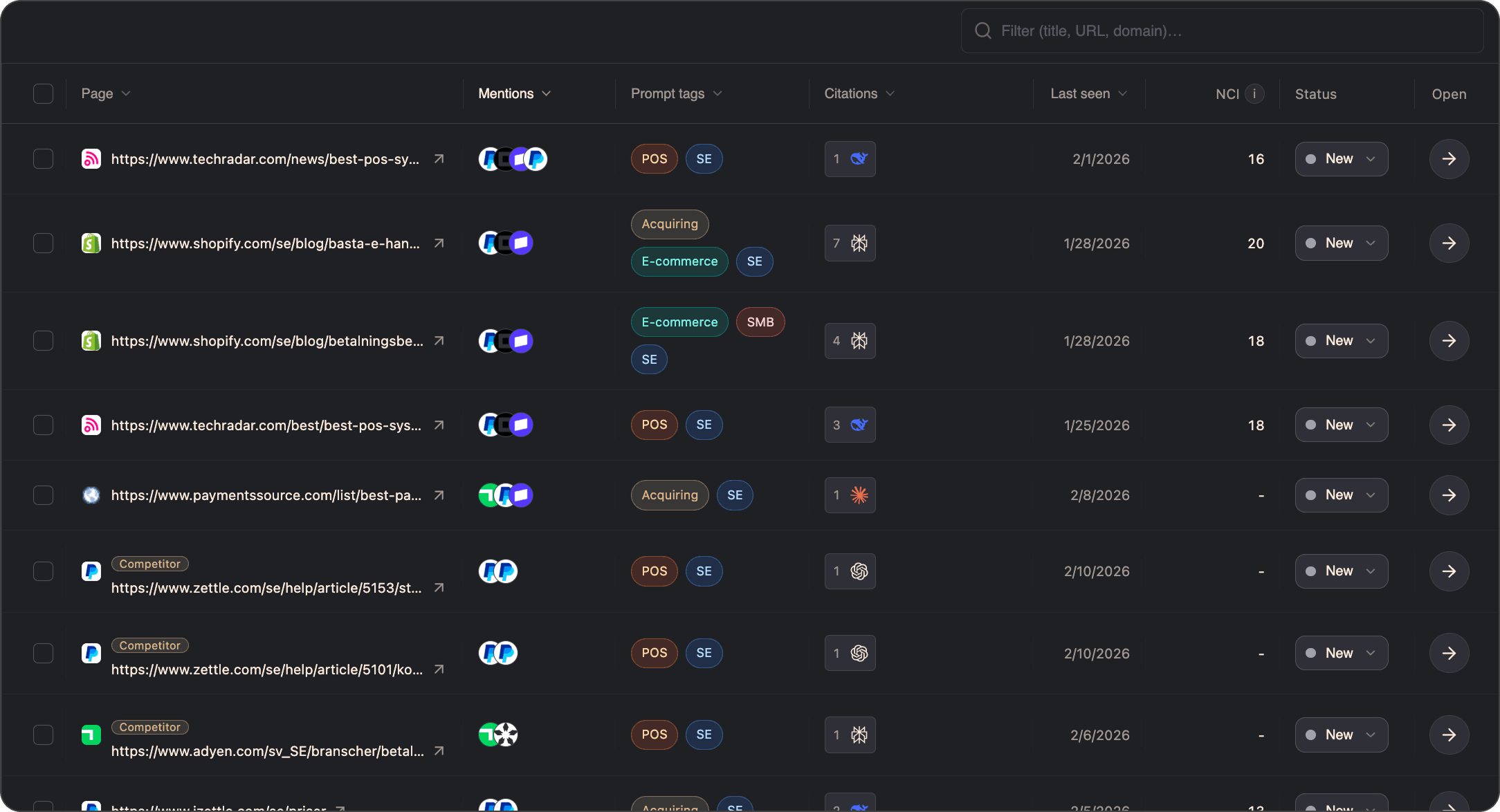
See the sources behind recommendations
AI answers are shaped by third-party credibility. Whaily shows you the citations and source pages that appear most often in your category, so you can focus on improving the proof AI trusts.
Identify which domains drive your wins and losses.
Validate claims with source proof, not guesses.
Prioritize improvements based on what AI actually cites.
Turn AI visibility into a repeatable process
Start with a small prompt library, tag it by intent, and track responses across models. Then focus on the sources that show up in your winning prompts.