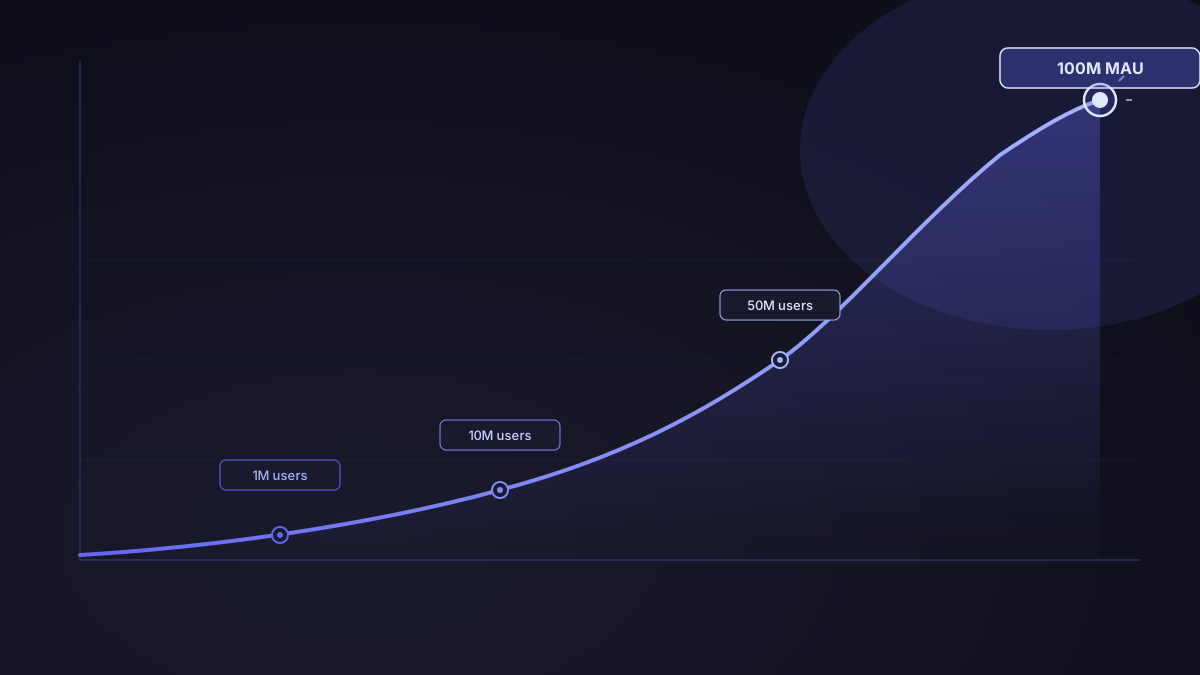
Perplexity has crossed 100 million monthly active users. That number, reported in late March 2026, puts it in the same conversation as established search and AI platforms that took years longer to reach equivalent scale. For a company that launched its consumer product in 2022, the trajectory is steep.
The figure matters beyond the headline. Perplexity's users are not a general cross-section of the internet. They skew technical, professional, and research-oriented. These are buyers who go looking for answers, not content. When they ask Perplexity which tool to use, they expect a considered response with citations, not a ranked list of links to scroll through.
What makes Perplexity different from other AI models
Most large language models operate on static training data. When you ask ChatGPT or Claude a question, the answer is drawn from knowledge baked in during training, usually months or years before you posed the question. The model has no awareness of what was published last week.
Perplexity works differently. It's built around retrieval-augmented generation. Every query triggers a live web search. The model pulls recent results, synthesizes them, and generates a response that cites its sources directly in the output. This creates a fundamentally different relationship between current content and the answer a user receives.
For brands, the practical effect is significant. A blog post published this week can influence a Perplexity answer next week. A press mention from this month is relevant to today's queries. Coverage in an authoritative trade publication right now can surface in recommendations to buyers right now, not after the next training cycle.
Perplexity's retrieval model creates a tighter feedback loop between content publishing and AI visibility than any closed-model platform. Brands that publish authoritative, frequently-updated content can see measurable visibility changes within days rather than months.
Who is using Perplexity and why it matters
The user demographics explain why B2B and technical brands should pay attention. Perplexity's growth has been concentrated among people doing serious research: software developers evaluating tooling, analysts comparing vendors, product managers assessing integrations, procurement teams building shortlists.
These are high-intent, high-value buyers. They are not casually browsing. They are building a decision. When someone at a 500-person company asks Perplexity "what's the best data pipeline tool for a Snowflake-heavy stack," the answer Perplexity provides is a direct input to a buying decision, often one that involves multiple stakeholders and significant budget.
The platform also skews international in a specific way. Perplexity gained early traction in markets with technically sophisticated early adopters: India, South Korea, parts of Northern Europe. B2B brands with international ambitions have an audience on Perplexity that is already in research mode.
The content signals that perform well on Perplexity
Because Perplexity retrieves live content, the factors that shape your brand's visibility on the platform are more actionable than they are on closed models.
Recency is the most direct lever. Perplexity's retrieval system favors recently published content. A brand that consistently publishes substantive, well-sourced content on topics adjacent to its product category maintains a steady presence in the pool of sources Perplexity can draw from. Publishing cadence matters more here than on any other AI surface.
Source authority shapes how heavily Perplexity's synthesis weights a given result. Content published on high-authority domains, whether your own site with strong backlink equity or third-party publications with established editorial standing, is more likely to be retrieved and cited. A feature in a respected trade publication carries more signal than an identical piece on a low-authority syndication site.
Specificity is underrated. Perplexity users ask precise questions. Content that answers specific buyer questions, with concrete details, use cases, and technical context, gets pulled into responses more reliably than generic category-level content. "Why use tool X for use case Y" outperforms "tool X overview" almost every time.
What this means for marketing teams
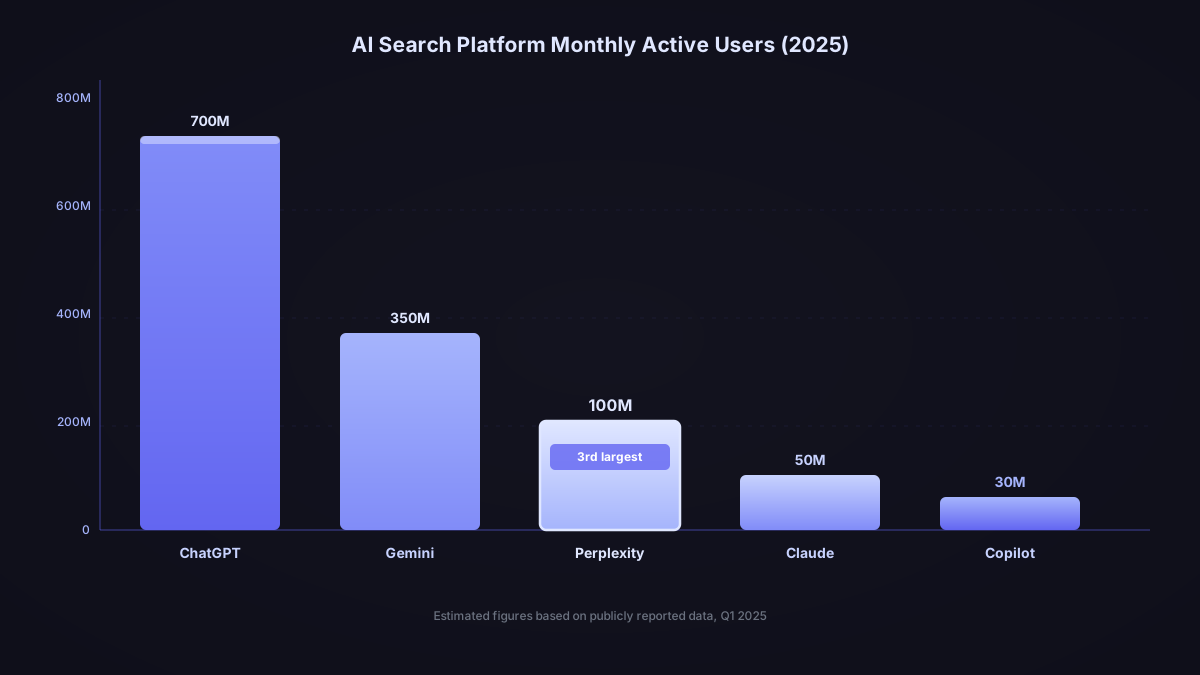
The 100 million MAU milestone is not just a growth stat. It signals that Perplexity is now a mainstream channel for research-mode buyers, with an audience that will keep growing. Marketing teams that have been tracking AI visibility only through ChatGPT have a gap in their picture.
The practical implication is a content calendar re-prioritization. Content written for SEO purposes, aimed at ranking for keywords, often lacks the specificity and recency that Perplexity retrieval rewards. The pieces that perform on Perplexity are closer to technical documentation, detailed comparisons, and opinionated use-case breakdowns than to traditional top-of-funnel blog posts.
PR strategy also shifts. Press coverage in authoritative publications gets retrieved and cited by Perplexity in ways that a brand's own content cannot replicate. A single strong placement in a trade publication that Perplexity regularly retrieves from is worth more to Perplexity visibility than ten self-authored posts.

See where your brand stands in AI search
Track how ChatGPT, Gemini, Perplexity, and Claude recommend your brand vs competitors.
Start tracking freeTracking Perplexity visibility alongside other models
The challenge with Perplexity visibility is the same as with all AI brand tracking: a single query at one moment in time tells you very little. Perplexity's live retrieval means answers can vary day to day depending on what has been recently indexed and retrieved for a given topic.
Useful measurement requires systematic query sampling across multiple timepoints, tracking which sources Perplexity cites when your brand appears, and monitoring competitor presence across the same queries. Whaily tracks brand visibility across Perplexity alongside other major AI models, giving you a structured picture of how your presence changes over time.
The growth milestone is a signal worth acting on. Perplexity is no longer a niche tool for power users. It has become a research platform that sits in the workflow of exactly the buyers that most B2B brands want to reach.
FAQ
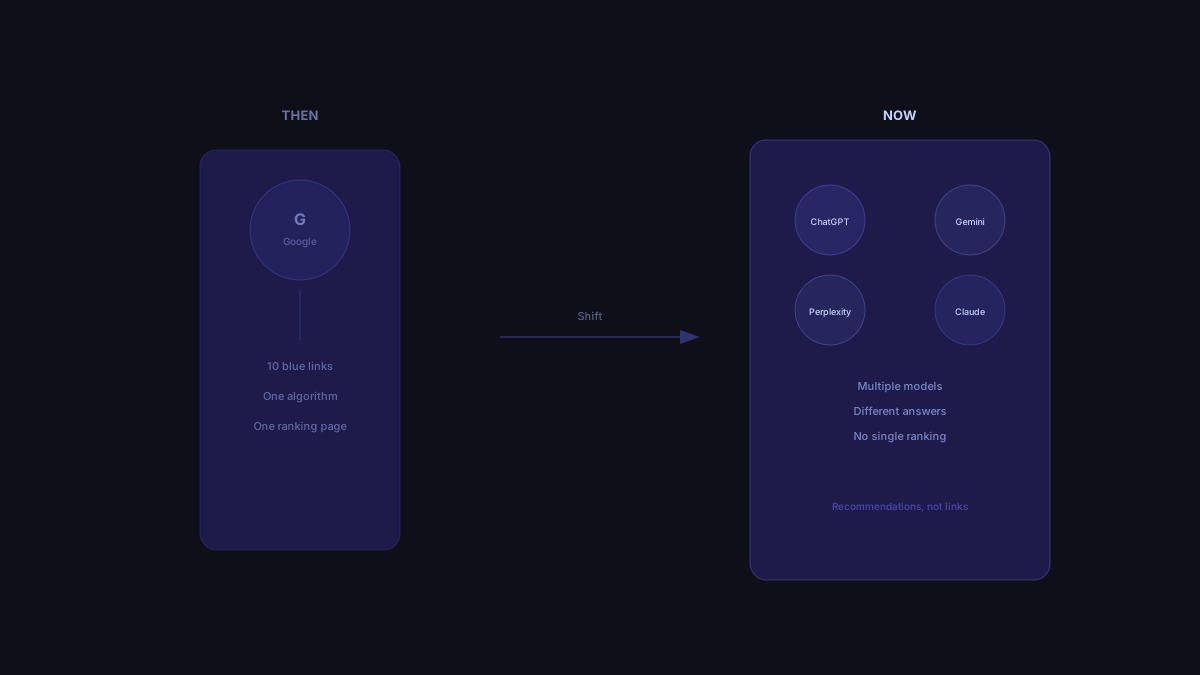
Does Perplexity visibility follow the same rules as Google SEO? Not directly. Perplexity retrieves live web content, so good SEO hygiene helps, but the factors that matter most are recency, specificity, and source authority in the context of live retrieval. Content that ranks in Google may not be the content Perplexity retrieves for a given query.
How quickly can a brand improve its Perplexity visibility? Faster than with closed models. Because Perplexity retrieves fresh content, a brand that publishes a well-optimized, authoritative piece can see it cited in Perplexity responses within days to weeks, not after the next model training cycle.
Should I treat Perplexity separately from ChatGPT in my AI visibility tracking? Yes. The two platforms have meaningfully different retrieval mechanisms, different user demographics, and different response patterns. A brand can have high visibility on one and low visibility on the other. Tracking them separately is the only way to understand where your actual gaps are.
What types of content does Perplexity cite most often? Based on observable patterns: recent third-party coverage in authoritative publications, structured comparison content, technical documentation, and user-generated reviews on high-authority platforms. Self-promotional brand pages are rarely retrieved and rarely cited.
See where your brand stands in AI search
Track how ChatGPT, Gemini, Perplexity, and Claude recommend your brand vs competitors.
Start tracking free