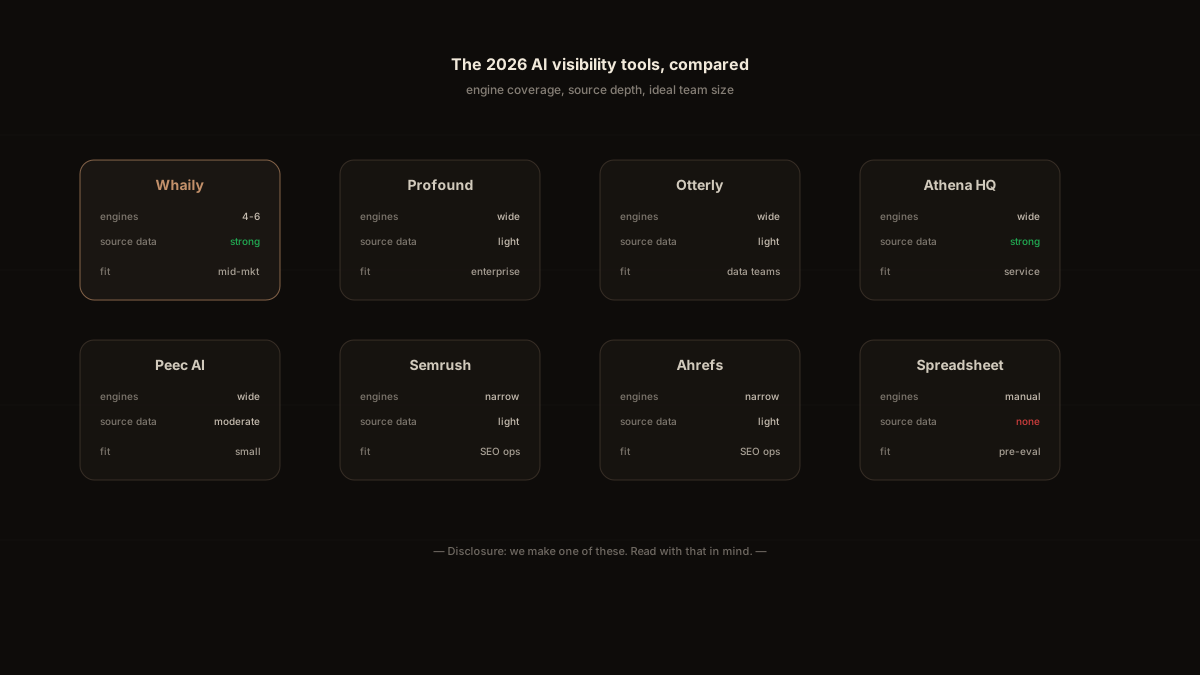
Disclosure first: we make one of the tools listed in this post. The way around the obvious bias problem is to be honest about the tradeoffs of every option, including ours. Read the comparison with that in mind. If we describe our own gaps too generously, ask us about them.
There are roughly seven platforms in 2026 worth actually evaluating for AI visibility tracking, plus a longer tail of feature additions to existing SEO tools. The right choice depends less on the feature matrix than on what you actually plan to do with the data.
This post walks through the seven, what each does best, what each skips, and the three questions to answer before you sign anything.
The three questions to answer first
Before reading any vendor comparison, decide on these three things. They will narrow the field by 70% before you compare features.
Which engines do you need to track? ChatGPT and Perplexity are non-negotiable for B2B in 2026. Gemini is increasingly required. Claude, Copilot, and vertical engines depend on your buyer. Tools differ in how many engines they cover, how often they sample, and how reliably they handle each.
Do you need source-level data or just presence data? Presence data tells you whether your brand was mentioned. Source data tells you which third-party sites are driving the citations. Without source data, you can see whether you are winning but not why. The work to fix visibility almost always requires source data; the work to report on visibility does not.
How many queries per category do you need to sample? Some tools sample 10 queries per category. Some sample 100. The difference between the two is the difference between anecdote and measurement. For a single brand in one category, 30-50 is the practical minimum. For multi-brand or multi-category, you need a platform that scales to hundreds per category without breaking your budget.
If you cannot answer these three, do not evaluate tools yet. The wrong answer to question 1 alone can have you paying for capabilities you will not use.
The seven options worth evaluating
Whaily
What it does well: cross-engine sampling across ChatGPT, Gemini, Perplexity, and others. Source-level attribution via the NCI (Normalized Competitor Influence Score) framework that quantifies which third-party sites shape responses in your category. Competitor tracking. Purchase criteria mapping that surfaces how AI engines describe brand attributes.
What it skips: enterprise-grade reporting (we are mid-market focused). Heavy integration into traditional SEO platforms (we are intentionally a separate tool, not a bolt-on).
Best fit: B2B teams in the 50-500 person range who want serious source-level analysis without enterprise procurement overhead.
Profound
What it does well: established player in the GEO measurement space. Strong reporting and dashboarding for executive audiences. Good multi-engine coverage with regular sampling intervals.
What it skips: deep source attribution. The product is more presence-focused than influence-focused.
Best fit: larger marketing organizations where the priority is consistent executive reporting rather than operational source-level diagnosis.
Otterly
What it does well: query volume at scale. Hundreds of queries per category, with strong methodology for clustering and intent classification. Good for teams who want statistical rigor on the visibility measurement itself.
What it skips: source attribution depth. Stronger on the "what is happening" side than the "what to do about it" side.
Best fit: data-driven teams or agencies who need defensible methodology and large sample sizes.
Athena HQ
What it does well: agency-style service layer wrapped around AI visibility data. Strong for teams that want a vendor partner rather than self-serve software. Reports come with interpretation, not just raw data.
What it skips: low-touch, low-cost self-serve. The model is consultative.
Best fit: teams that do not have an in-house SEO or content strategist who can interpret AI visibility data and prefer a managed approach.
Peec AI
What it does well: solid presence and citation tracking. Newer player, fast feature velocity. Pricing aimed at smaller teams.
What it skips: deep category history (less back-data than older tools). Some advanced source-level analysis still maturing.
Best fit: smaller marketing teams or agencies who want core tracking at a lower price point and can grow with the tool.
AI Visibility (the SEO-tool add-on category)
Several established SEO platforms have shipped "AI visibility" modules in 2025 and 2026. Semrush, Ahrefs, and others. The features vary widely.
What they do well: integration with existing SEO workflows. If your team already lives in one of these tools, the AI visibility module is one less platform to manage. Pricing is usually included or a small add-on.
What they skip: depth. Most of these modules are 1.0 versions and lag specialist tools on engine coverage, sampling frequency, and source attribution.
Best fit: teams who want a baseline AI visibility view without adding another vendor. Probably not the right tool if AI visibility is your primary focus, but a reasonable starting point.
In-house spreadsheet
This is a real option many teams use. A shared sheet with a column per engine, a row per query, manually refreshed monthly.
What it does well: free, fully transparent, no vendor lock-in. Forces the team to look at actual AI responses, which builds intuition.
What it skips: scale, consistency, freshness, source attribution, anything beyond raw presence data. Falls apart past 20-30 queries.
Best fit: teams running their first AI visibility audit, before they know enough to choose a vendor. Or teams in early-stage categories where the formal tools are overkill.
The four ways teams pick the wrong tool
A few patterns that show up in customer conversations.
Picking based on feature count. A tool with 47 features is not better than one with 12 if you only use four. The question is whether the 4 features you actually use are stronger in tool A or tool B. Most teams use the same handful of features regardless of which tool they bought.
Picking based on engine coverage breadth. A tool that tracks 8 engines sounds better than one that tracks 4. But if your buyer only uses ChatGPT and Perplexity, you are paying for measurement you will never read. Map the engines to your buyer first.
Picking the cheapest option. AI visibility tooling at scale is hard, and the cheap options skimp on sampling frequency, source attribution, or both. If the tool only refreshes monthly, you cannot react to changes. If it does not show sources, you cannot diagnose why you are losing.
Picking the brand-name option. The biggest vendor is not always the best fit. Several specialist tools outperform the larger platforms on the specific work of AI visibility because they are built for it from the start.
See where your brand stands in AI search
Track how ChatGPT, Gemini, Perplexity, and Claude recommend your brand vs competitors.
Start tracking freeHow to actually run the evaluation
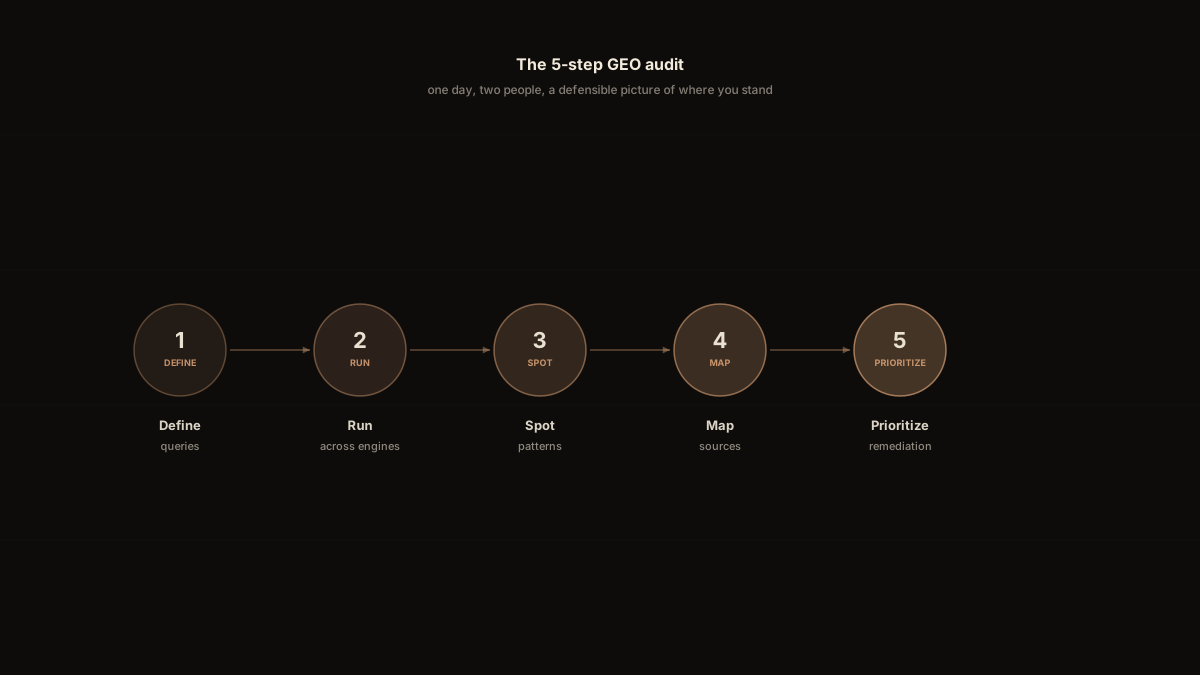
A working three-week process:
Week 1: define the question. What buyer queries matter? Which engines do your buyers use? What does "success" look like for the work this tool will support? Write these down. They become your evaluation rubric.
Week 2: trial two or three tools. Most platforms offer trials or limited free access. Set up the same query set in each. Compare not just the outputs but the workflow. How long does it take to set up a new category? How easy is it to share a report? Can you pull the data into your existing systems?
Week 3: stress test the one you like. Run a real use case. Try to answer a specific question your team actually has: "why are we losing citations to competitor X?" or "which sources are driving Gemini responses in our category?" If the tool helps you answer it in under a day, it is probably the right choice. If you cannot get to the answer, the tool is not the right fit no matter how good the demos looked.
What to ignore
A few things vendors will push that probably should not move your decision much.
AI-generated summary reports. Every tool has them. Most teams stop reading them after a month and look at the underlying data directly.
Sentiment analysis on AI responses. The methodology is shaky and the use case is unclear. Presence and framing matter more.
Predictive scoring. "Predicted AI visibility" features that purport to tell you how a piece of content will perform. The models are not good enough yet for this to be reliable. Treat as speculative.
White-label or agency reseller features. Important for agencies. Irrelevant for in-house teams. Pay only if you need.
What I would buy if I were buying today
Honest framing: the right answer depends on your situation. A small marketing team in B2B SaaS would probably get the most out of Whaily or Peec AI, depending on budget. A larger marketing org with established SEO discipline might find an SEO platform's add-on enough to start, then upgrade as the discipline matures. An enterprise might prefer Profound or Athena HQ for the reporting and service layers.
The single most expensive mistake is buying a tool that gives you presence data only and then not having the source data you need when the executive asks "why are we losing?" If your team has any chance of being asked that question, source attribution is not optional.
FAQ
How long do I need with a tool before I can evaluate it? Two months is the realistic minimum. The first month is setup and learning the interface. The second month is when you actually start using the data for decisions.
Should I switch tools if I am unhappy with my current one? Probably. The historical data loss from switching is real but not catastrophic. The cost of running blind for another quarter usually exceeds the migration cost.
Can one tool replace my SEO platform? Not yet. AI visibility tools are still narrower than traditional SEO platforms. Treat them as a parallel discipline, not a replacement.
How does Whaily compare to free options? We are honest that for under 20 queries in one category, a spreadsheet might be enough. The platform pays off when you need scale, consistency, or source attribution. If your needs are simple, do not over-buy.
See where your brand stands in AI search
Track how ChatGPT, Gemini, Perplexity, and Claude recommend your brand vs competitors.
Start tracking free