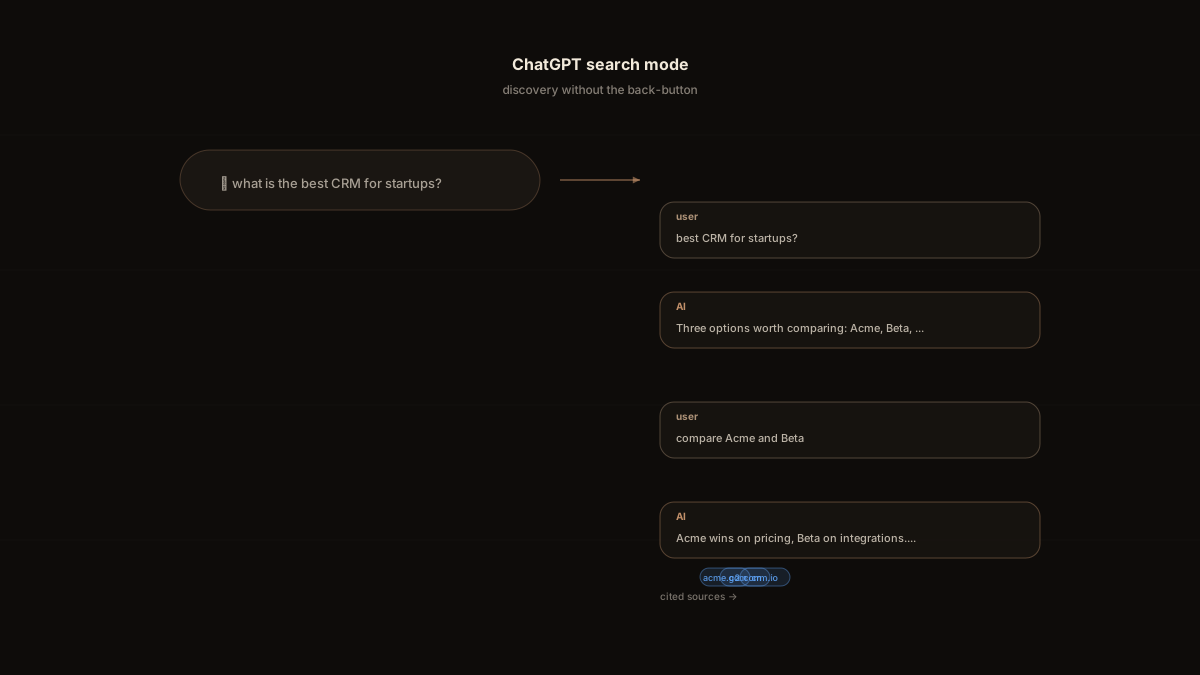
There is a screenshot I keep seeing in shared Slack channels. A ChatGPT conversation with a small "Sources" footer at the bottom, eight citation chips, none of them pointing to a website that the marketing team had ever optimized for.
The reaction in the screenshot's reply thread is always the same. Some variation of: huh.
That huh is the entire story.
What actually shipped
The ChatGPT search expansion that landed in May 2026 is the third or fourth round of changes to how the product handles real-time information. The first round added a web browsing tool. The second round made the tool default-on for most queries. The third made the sources clickable. The fourth (this one) made the sources first-class citizens of the response.
The shift is hard to overstate even though no individual change is dramatic. Web search inside ChatGPT is no longer an opt-in tool. It is the default behavior for any query that benefits from current information. The sources appear visibly in the response. The user is increasingly going to expect them. The model is increasingly going to surface them prominently.
In practice this means that a meaningful share of buyer discovery queries that used to run through Google now run through ChatGPT, with a response that quotes three to eight sources, all of which the user can click. Whether your brand appears in those sources is the new visibility question.
What the data is showing
The numbers are still moving but the direction is clear.
Across the queries we monitor for B2B SaaS categories, ChatGPT search-mode response volume has increased meaningfully through 2025 and into 2026. Plenty of buyer queries that previously returned the model's generic recommendation now return a search-grounded answer with named sources.
The sources cited in ChatGPT search responses are not the same as the sources cited in Perplexity for the same query. There is overlap, but each engine has retrieval preferences. ChatGPT tends to lean more heavily on established editorial publications. Perplexity leans more on review sites and forums. Both pull from your domain less often than from third-party authority sites.
Brand visibility in ChatGPT search responses correlates weakly with Google rankings for the same query. A brand can rank in the top three on Google and not appear in ChatGPT's response. A brand can be absent from Google's top page and consistently cited in ChatGPT. The systems are now functionally independent for visibility purposes.
The phrase "we rank well on Google" stopped being a reliable proxy for "we're discoverable" somewhere in 2024. By 2026 it is actively misleading if used alone.
What this changes about visibility work
Three practical shifts worth taking seriously.
The first is that ChatGPT search is now a measurement target, not an optional one. If you only track visibility on Google, you cover a shrinking share of the buyer discovery surface. If you only track ChatGPT, you miss the part of the buyer journey that still happens on Google. You need both, plus Perplexity, plus whatever else your specific buyer set uses.
The second is that the citation pool matters more than your domain rank. ChatGPT search retrieves a set of sources, summarizes them, and cites them. If your domain is not in the retrievable pool for relevant queries, you are absent. If your domain is in the pool but with weak signals, you might be cited at low position with low frequency. The work to get into the pool is editorial and structural, not just rank-chasing.
The third is that the user behavior has changed. People who use ChatGPT search regularly do not bounce back to Google for follow-ups. They ask the next question in the same conversation. This means the discovery sequence has compressed. A buyer who would have run three Google searches now runs one ChatGPT conversation that covers all three. Your visibility in the first question matters more, because the second and third questions are conditional on what the model already returned.
The categories where this shows up first
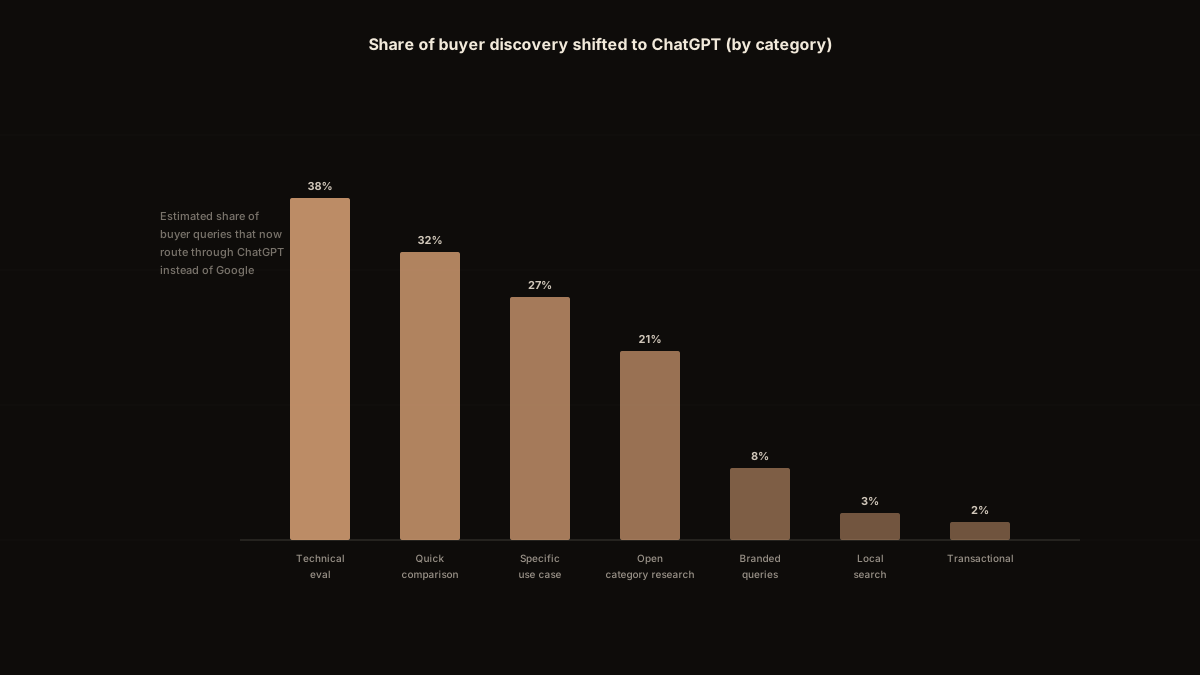
ChatGPT search adoption is uneven. The categories where it has bitten earliest:
Technical evaluation queries. Engineers and IT buyers were on the early adopter curve and use ChatGPT for category research more than the average. If your buyer is technical, your ChatGPT visibility matters more than your Google rank in their evaluation step.
Quick comparison queries. "X vs Y" types of questions. ChatGPT search returns a structured comparison faster than reading two reviews. The compression is the value.
Specific use-case queries. "Best [tool] for [highly specific scenario]." Google needs exact-match content; ChatGPT search synthesizes across multiple imperfect matches.
The categories where it has bitten less so far:
Local search. Maps queries, business listings, and "near me" queries still mostly route through Google and the platforms with structured local data.
Pure transactional queries. "Buy X." Users click out to commerce sites before they finish typing.
Highly regulated or sensitive categories. Health, legal, financial. Users are more cautious about LLM responses for these, and the engines themselves have stricter guardrails.
How to start showing up
If you have not been measuring this, the starting work is small and high-value.
Pick fifteen queries your buyers actually ask during evaluation. Phrase them naturally, the way someone in a hurry would type them, not the way an SEO would optimize them. Run each query against ChatGPT in a clean session. Note: whether your brand is mentioned, whether your domain is cited, which sources are cited instead, and how your brand or category is framed.
That set of fifteen queries is your starting picture. You will see the failure modes immediately. Common ones:
- Your brand is not mentioned at all (LLMO problem).
- Your brand is mentioned but no URL on your domain is cited (AEO problem).
- Your domain is cited but for the wrong page (intent problem).
- Your brand is framed in a way that hurts your positioning (source mix problem).
Each one has different remedies. The work to fix LLMO presence is mostly long-term editorial. The work to win AEO citations is mostly structural and content quality. Trying to fix everything at once usually fixes nothing.
See where your brand stands in AI search
Track how ChatGPT, Gemini, Perplexity, and Claude recommend your brand vs competitors.
Start tracking freeWhat this means for Google work
Nothing in this update means Google is irrelevant. It means Google is one channel among several.
The work that wins on Google still wins on Google. Rankings still matter for the queries that route through Google. The content investments that built your organic traffic are not wasted.
What has shifted is the share. If your buyer used to do five Google searches before contacting sales, and now they do two Google searches and three ChatGPT conversations, your Google visibility covers less of the journey than it did. The Google work is still worth doing. It just is not the whole job anymore.
The most useful mental model: Google is a known-good channel that needs maintenance. ChatGPT and Perplexity are growing channels that need investment. Allocate accordingly.
A small bet that pays disproportionately
If you want a single, high-leverage move:
Audit the top three or four queries that drive evaluation traffic in your category on Google. Look at the URLs you rank for and the URLs that ChatGPT cites for the same query. If they are different domains, the gap is your editorial opportunity.
Specifically, the third-party sites cited by ChatGPT for evaluation queries are usually sites where you can earn coverage with focused outreach. They are not always the same sites that drive Google rank. Getting included on them is a small, defined project with measurable impact.
Whaily can show you the gap automatically. Doing it manually for a small set of queries is also fine. The point is to look.
What to watch next
Two things worth tracking over the next two quarters.
ChatGPT search behavior on transactional and "buy now" queries. Right now the engine routes these to traditional commerce flows. If that changes, it changes the calculus for direct-to-consumer brands and ecommerce specifically.
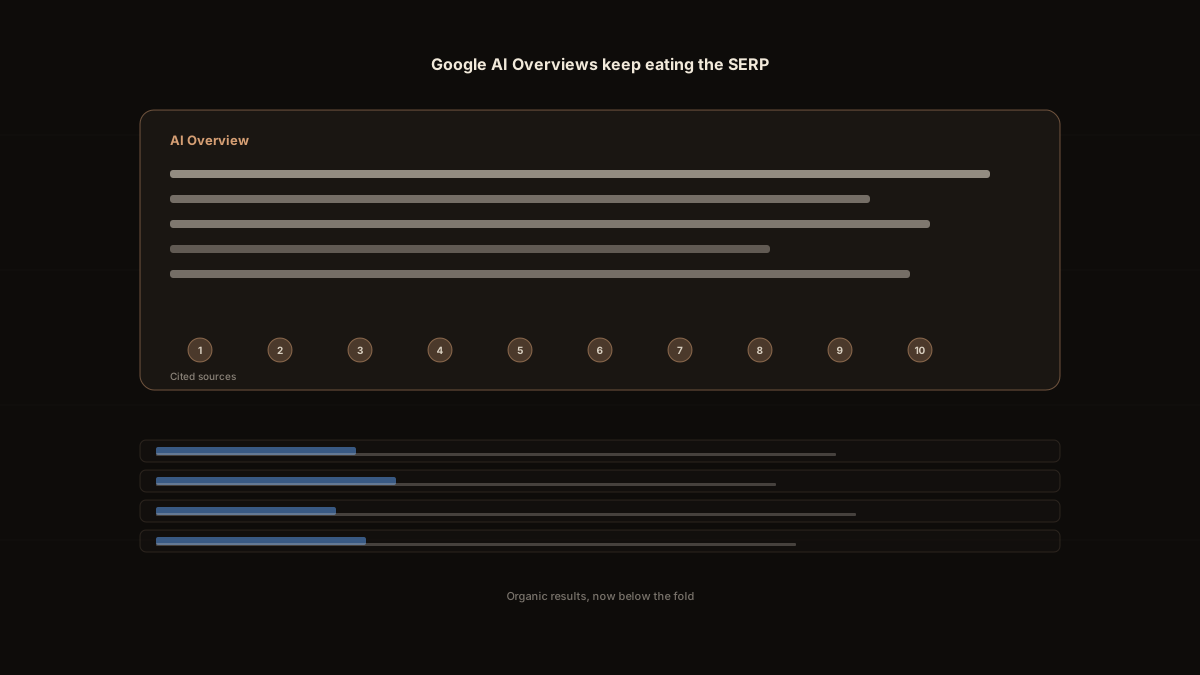
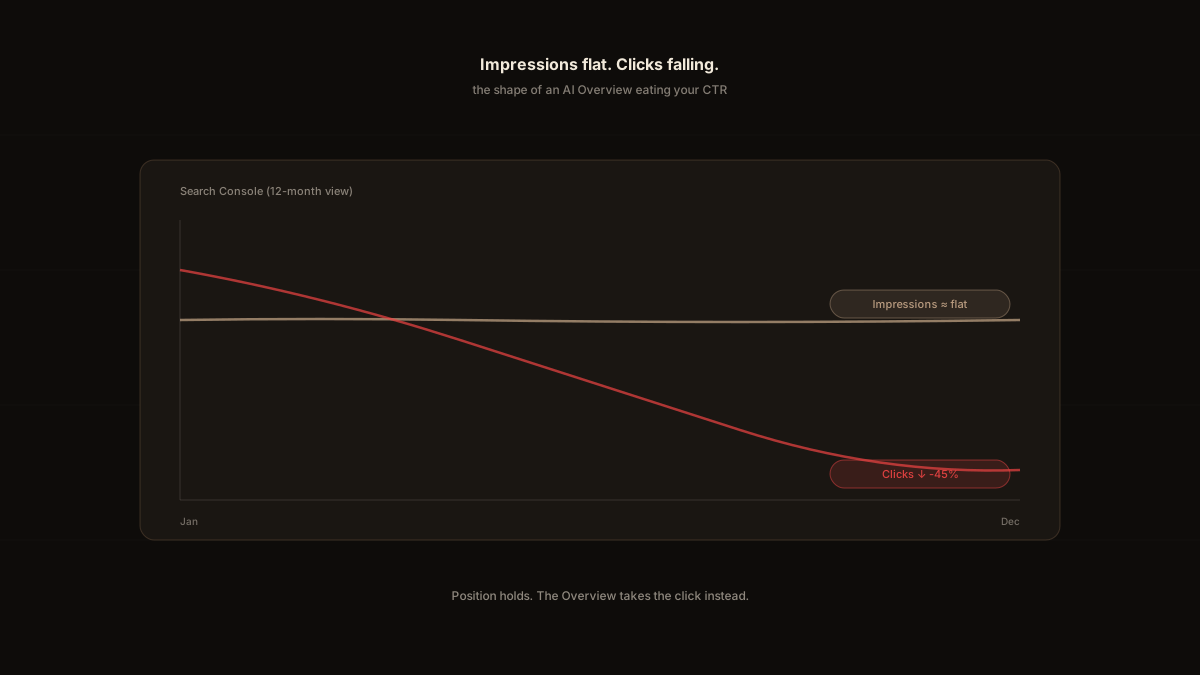
Google's response. Google AI Overviews is already eating the SERP. Whether Google leans further into being an answer engine itself (which would compress the difference between Google and ChatGPT search) or doubles down on the SERP-as-list model is unresolved.
Either way, the safe bet is to start measuring across multiple engines now. The bets that look risky in 2026 will look obvious in 2027.
FAQ
Is ChatGPT search going to replace Google? For some queries, yes. For others, probably not. The likely outcome is share shift, not replacement. Treat it that way and you stop having to predict the end state.
Should I focus on ChatGPT search or Perplexity? Depends on where your buyers actually are. Run the diagnostic queries on both. Whichever returns more relevant responses for your buyer's actual queries is where to focus first.
Will my SEO work translate to ChatGPT visibility? Partially. The high-authority third-party coverage that helps your SEO usually also helps your ChatGPT citation rate. The on-site technical SEO work helps less directly. The keyword-density work helps almost not at all.
How do I measure this without dedicated tooling? Manual sampling, fifteen queries per engine, monthly. Tedious but doable. Tools like Whaily automate it across more queries and engines, but the manual approach gets you 80% of the signal for a one-quarter learning curve.
See where your brand stands in AI search
Track how ChatGPT, Gemini, Perplexity, and Claude recommend your brand vs competitors.
Start tracking free