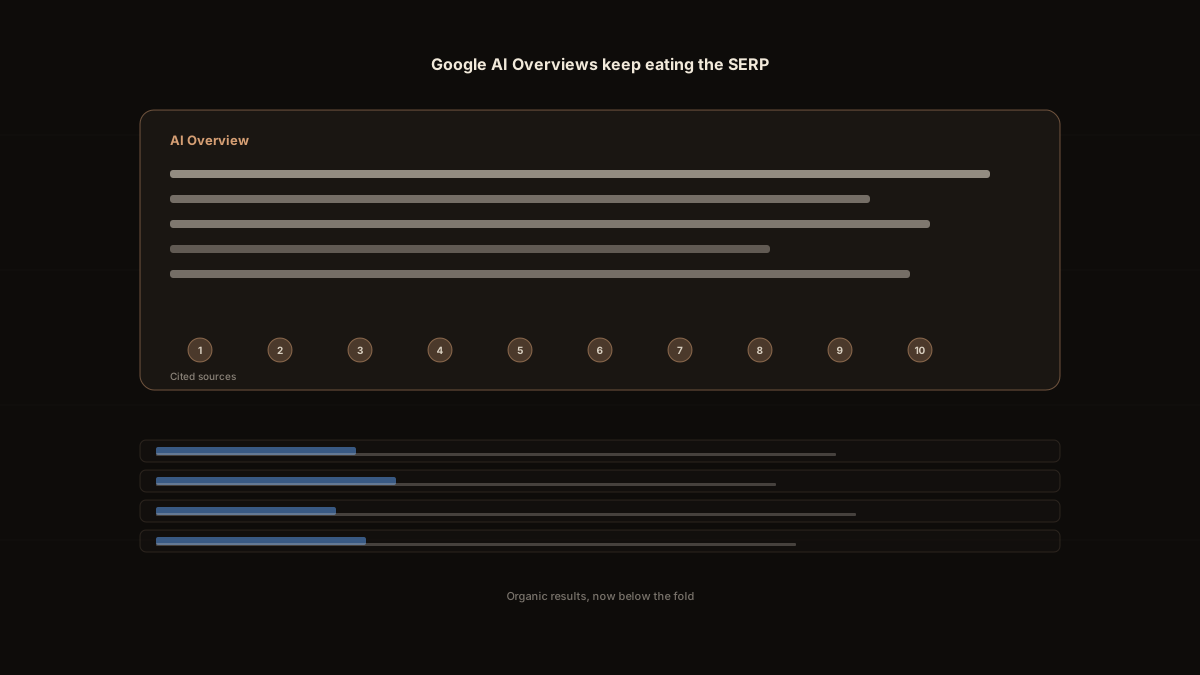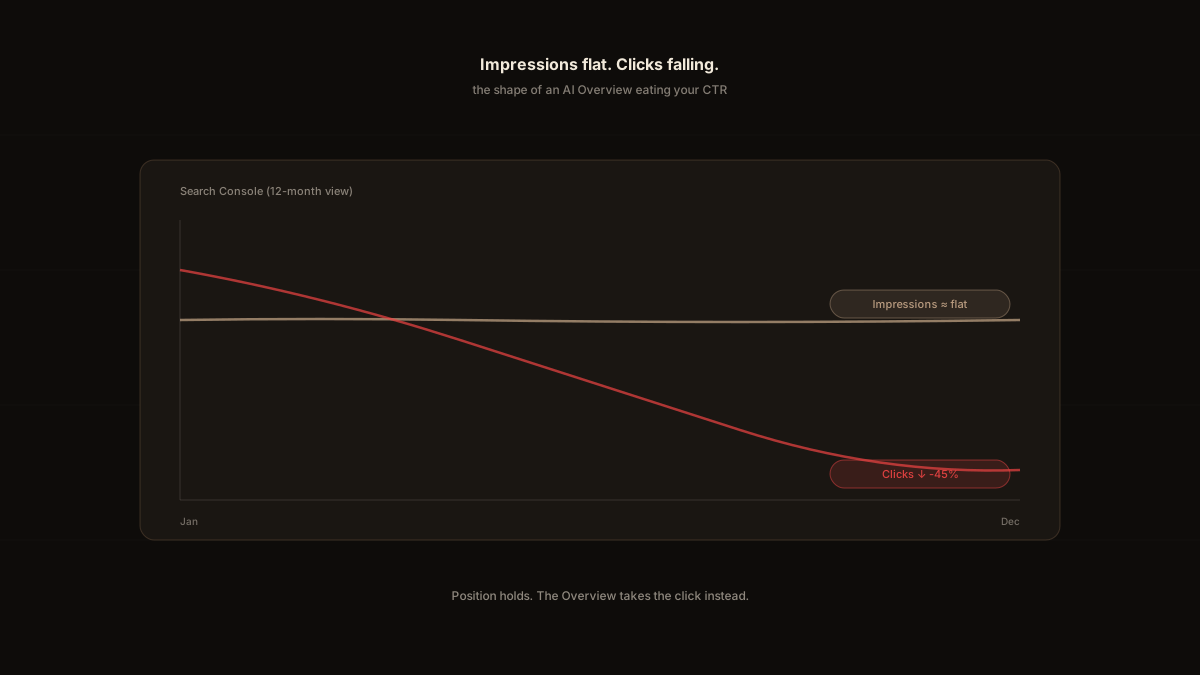
A subtle thing happened in Google AI Overviews this month. The kind of thing that looks like nothing if you are not paying attention, and like a meaningful shift if you are.
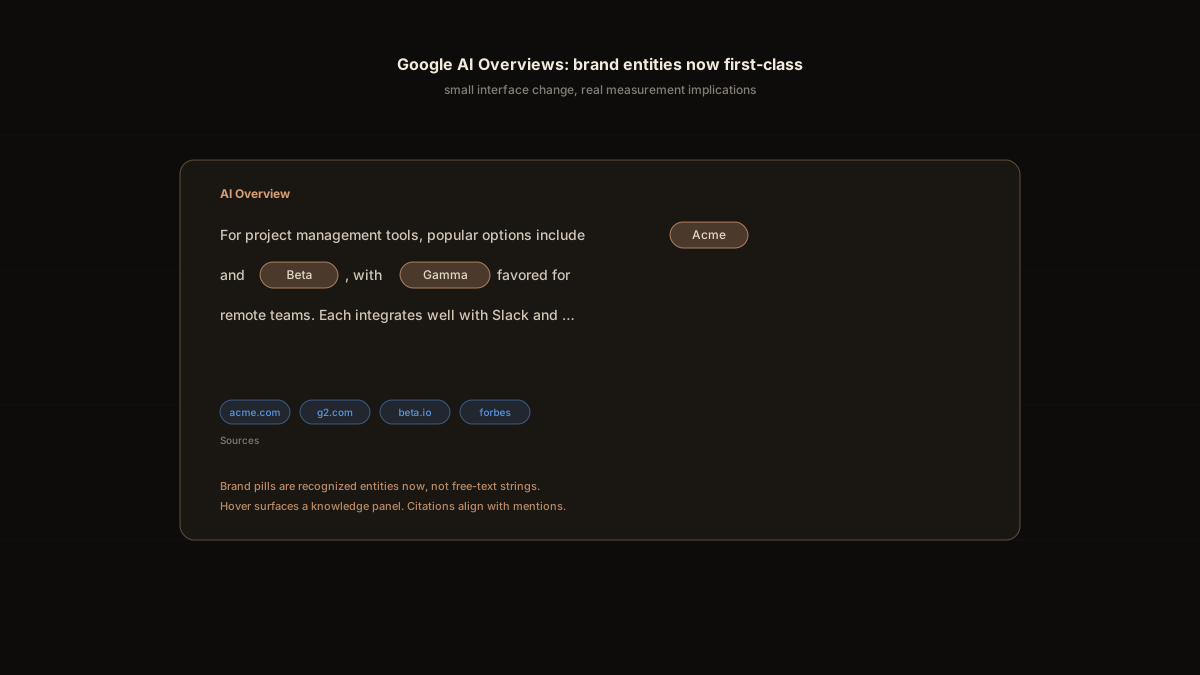
Brand names mentioned in the body of an Overview are now treated more like discrete entities than like text. They show up with slightly different visual treatment in some surfaces, they often connect to a brand-entity panel on hover, and they appear to be more consistently attributed back to source documents in the citation list.
It is a small interface change. It is also a real measurement change. The visibility being made visible was always there. Now it is countable.
What actually changed
There are three observable shifts, and they probably reflect one underlying capability.
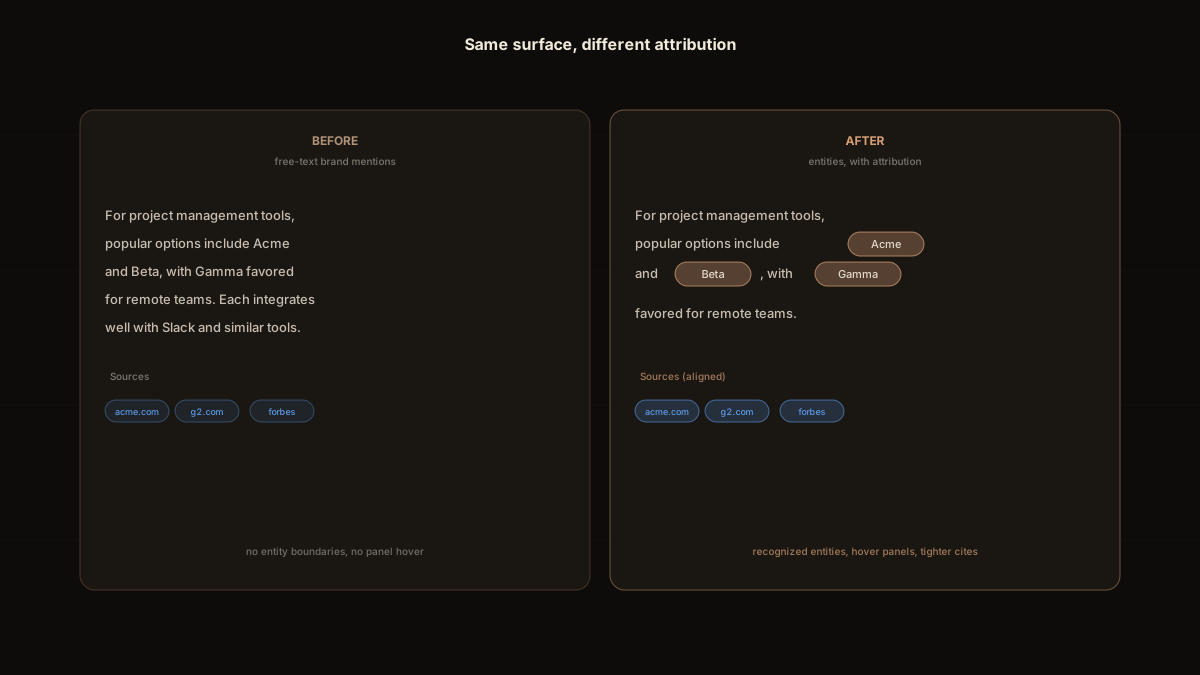
Brand entities are being recognized more reliably. When an Overview mentions a product or company, Google is more frequently treating it as a known entity rather than a free-text mention. This shows up as inline links or info-card hovers on some queries, and as more consistent capitalization and naming across responses.
Citation attribution is tighter. The Overview's source list now appears to be more selectively aligned with the specific entities mentioned in the body. Sources that informed the brand description are visibly grouped with that description in some surfaces.
Brand-related queries return richer brand panels. Queries like "is [brand] good" or "[brand] vs [competitor]" now produce Overview responses that integrate Google's structured brand knowledge with retrieved content. The two used to be more siloed.
The capability underneath is presumably Google's entity recognition and knowledge graph machinery being applied more aggressively to the Overview generation pipeline. The brand names you see in an Overview are increasingly treated as entities, not strings.
The practical effect is that brand mentions in Google AI Overviews are now closer to being measurable as a distinct event. Before, you had to scrape the Overview text and parse it. Now, the brand entities are surfaced more explicitly.
Why this matters for measurement
The dominant complaint about AI Overviews measurement until now has been that brand visibility was hard to observe at scale. You could see your domain in the citation list. You could read the Overview text. But the moment-by-moment brand attribution, the actual data on whether and how your brand was named, required text parsing and was unreliable.
The recent shift makes brand mentions more tractable. Tools that previously had to do fuzzy text analysis to detect brand presence can now lean on more structured signals. This means your AI Overview visibility data is about to get more accurate at the same time it is becoming more important.
Two specific implications.
Trend data is going to look different. As measurement gets more accurate, the baseline shifts. Visibility scores measured under the new attribution surface will not be directly comparable to scores measured under the old one. Tools and dashboards need to recalibrate. Expect a discontinuity in your trend lines that is measurement-driven, not behavior-driven.
Competitor comparison gets easier. When brand entities are surfaced more reliably, comparing your presence to competitors' presence across the same queries becomes a cleaner exercise. Where you used to have to guess at the relative shape of mentions, you now have something closer to a count.
What does not change
A useful frame: the new attribution surface changes how you measure visibility, not how you earn it.
The work to be cited in Google AI Overviews is the same as it was last month. High-authority content. Strong structured data. Editorial coverage from sources Google trusts. Topical depth. None of that shifted.
What did shift is the speed and confidence with which you can see whether the work is paying off. The lag between "we published something" and "we can measure the impact" tightens when the measurement gets cleaner.
This is good news. It is not the existential threat the more breathless takes are making it out to be. It is closer to a long-overdue measurement improvement.
Categories most affected
The change shows up most clearly on queries that benefit from entity recognition.
Product comparison queries. "X vs Y" types of queries now produce Overviews where the brand entities are more cleanly demarcated. This was always the case for the heaviest comparison queries; it is now extending to mid-frequency comparisons.
Brand-attribute queries. "Is X reliable" or "what is X known for" types of queries. The Overview here was always brand-centric. The new attribution layer makes it easier to see which third-party sources are shaping the attribute description.
Category-leader queries. "Best X for Y" queries. The leaders in the response are now slightly more entity-distinct in the surface, which means presence and absence are easier to observe.
Less affected:
Tutorial and how-to queries. Brand mentions in tutorials are usually incidental, not central. The new attribution surface affects these less.
Local and transactional queries. AI Overviews are less dominant here to begin with, so the attribution changes have less surface area to act on.
What to do this week
Three small moves.
Pull a sample of your top fifteen queries through the AI Overview surface and look at brand entity treatment. Note whether your brand is being recognized as an entity (rich hover, info card, structured naming) or treated as plain text. The former is a stronger signal of being "seen" by the knowledge graph.
Check your structured data. Brands that are recognized as entities tend to have clean Organization schema, claimed Knowledge Panels, and consistent naming across the web. If your structured data is inconsistent or missing, the new attribution layer surfaces the gap.
Re-baseline your AI Overview visibility tracking. Whatever cadence you have been running, plan to take a fresh reading in the next two weeks and treat it as a new baseline. Comparing post-change data to pre-change data without acknowledging the measurement discontinuity will produce misleading trend lines.
What is plausibly coming next
Two speculations, framed honestly as speculations.
The first is that the attribution surface gets exposed more directly to publishers and brands. Some form of Search Console feature that shows you which Overviews cited you, when, and at what prominence is a natural next step. Google has been moving in this direction; the recent attribution improvements make it more feasible.
The second is that the same entity-recognition work feeds into a clearer ranking signal for AI Overview citation order. Right now the order of cited sources in an Overview is opaque. As the attribution layer matures, expect more visible weighting of why one source was prioritized over another.
Neither is guaranteed. Both fit the trajectory.
See where your brand stands in AI search
Track how ChatGPT, Gemini, Perplexity, and Claude recommend your brand vs competitors.
Start tracking freeThe honest summary
Nothing about the recent change requires you to overhaul your strategy. It requires you to recalibrate your measurement and to keep doing the work that wins AI Overview citations.
If your brand was visible last month, it is likely still visible. If it was invisible, the new attribution layer makes the invisibility more measurable, which is uncomfortable but more useful. The cure is the same in either case: high-authority content, clean structured data, strong third-party coverage.
The change is genuinely interesting. It is not a crisis. Treat it as a measurement improvement that happens to be inconvenient for your dashboards, not as a strategic shift that requires a re-plan.
How Whaily handles the change
We are adjusting our Google AI Overview tracking methodology to reflect the new attribution surface. The trend lines in our dashboards will show a recalibration point so you can see where the measurement change happened. The underlying numbers should be cleaner going forward; the historical comparison just needs the asterisk.
FAQ
Did Google announce this change publicly? Not in detail. The shift was observable in production behavior over the past couple of weeks. Google has not published a formal changelog entry covering all of it.
Does this affect Google rankings? Indirectly at most. The change is in how AI Overviews handle brand entities, not in how the core search algorithm ranks pages. Your organic rankings should be approximately unaffected.
Should I update my structured data because of this? You should have clean structured data regardless. The recent change raises the value of having it right. If your Organization schema, knowledge panel, or entity references are inconsistent, fix them.
Will my AI Overview visibility metric move? Probably. The size and direction depend on whether the new attribution surface recognized your brand more or less reliably than the old one. Plan for a discontinuity, not a trend.
See where your brand stands in AI search
Track how ChatGPT, Gemini, Perplexity, and Claude recommend your brand vs competitors.
Start tracking free