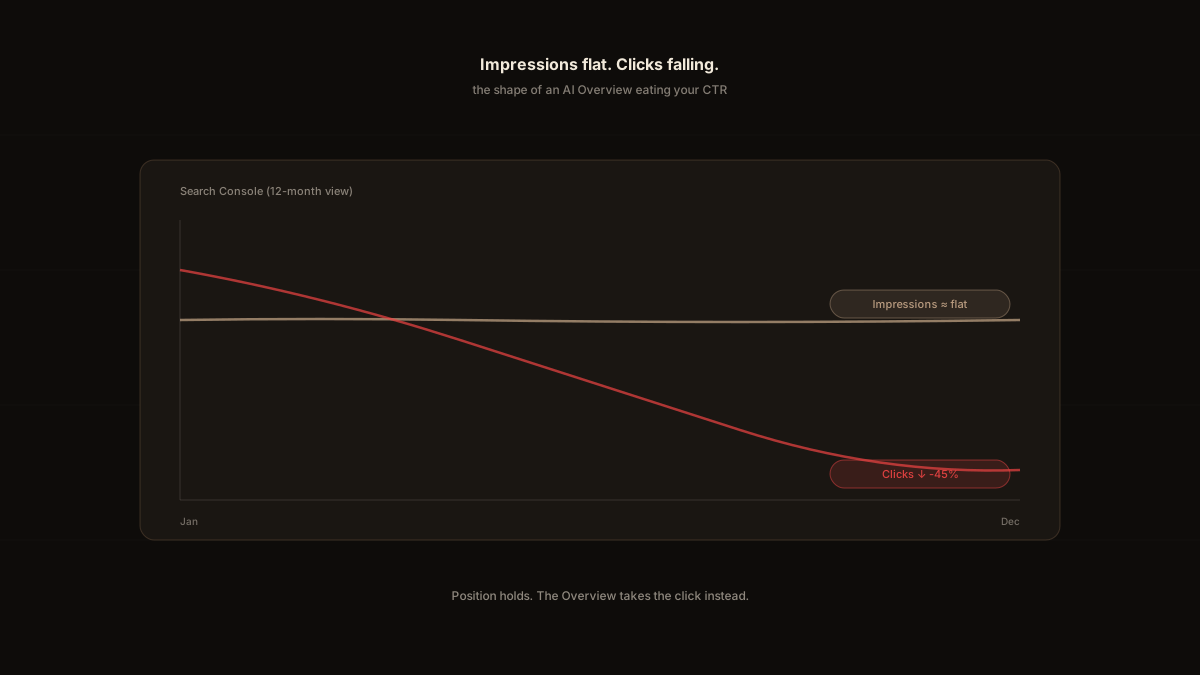
A pattern I keep seeing in Search Console screenshots people share in Slack.
The impressions line is approximately flat. The clicks line is dropping. The average position is unchanged. The CTR is in free fall.
That shape has a specific cause and a specific set of responses. It is what Google AI Overviews do to the SERP when you still rank but no longer get the click. The post below is for that shape.
What is actually happening
When an AI Overview is present on a query you rank for, three things change at once.
The Overview occupies the space above your result. On mobile, this is the entire first scroll. On desktop, it is most of the visible area. Your position eight result that used to peek above the fold is now well below.
The Overview answers the question in the SERP. For informational queries, this removes much of the user's reason to click. They saw what they came for. The tab closes.
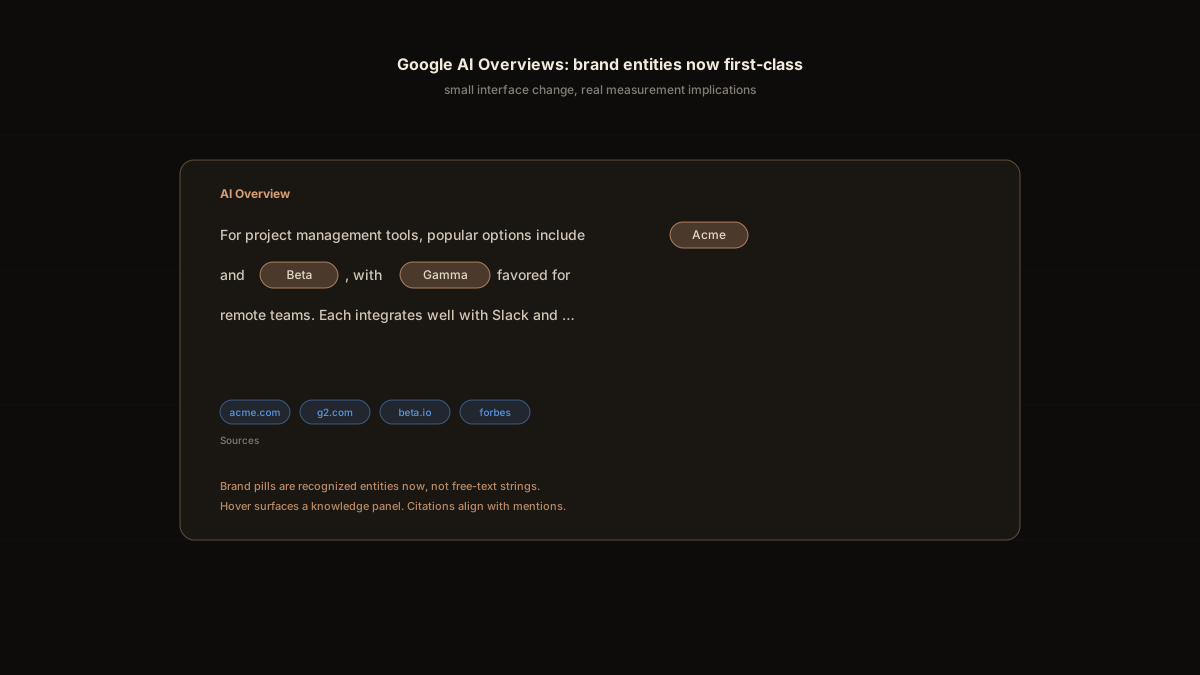
The Overview cites a small number of sources, sometimes including yours. When you are cited, you get a small fraction of the click value you would have gotten from being in the actual organic results. When you are not cited, you get almost nothing.
The result in your Search Console: same impressions (you still rank), worse clicks (most users no longer click), declining CTR. The position number does not move because position is measured relative to the organic results, which is now the secondary part of the SERP.
Average position is now a misleading metric on queries with AI Overviews. A "position 3" on a query with a heavy Overview is functionally worse than a position 3 used to be. Stop reporting position-only on these queries.
The first move: identify the affected pages
Not every page on your site is affected. The work is to find the ones that are.
Open Search Console. Filter queries by "high impressions, low CTR, falling clicks year-over-year." Cross-reference with manual SERP checks: for each query in the list, run it on Google in an incognito mode and note whether an AI Overview appears.
You will end up with three buckets:
Queries with Overviews where you are cited. Your URL appears as a source in the Overview. The click-through is reduced but not zero. Some traffic still arrives, and the citation itself does brand work.
Queries with Overviews where you are not cited. Your URL is below the Overview. The click-through is heavily reduced. You are getting visibility credit (impressions) but very little click value.
Queries without Overviews. Standard SERP. Your CTR is approximately what it always was. No action needed.
Most of the diagnostic work goes into the second bucket. The first bucket is partially working. The third bucket is fine. The second is where the recovery effort matters.
Move 1: become the citation source on the queries you almost own
For queries where you rank well but are not cited, the high-leverage move is to become the cited source.
The pattern that gets pages cited:
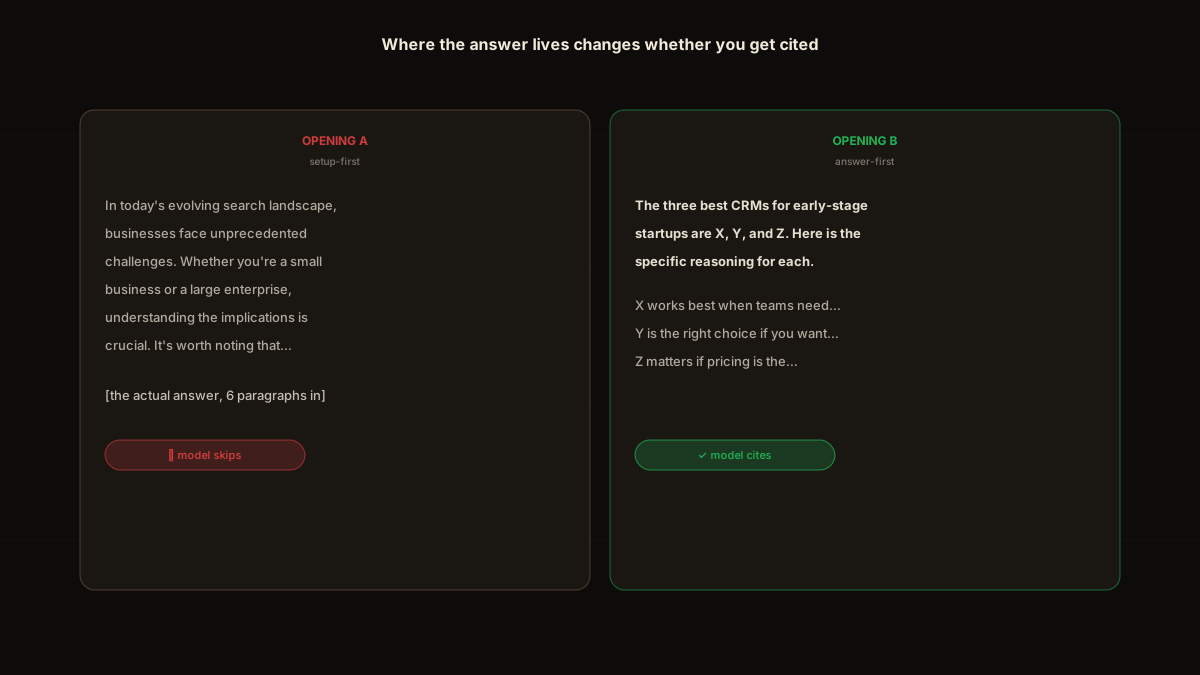
Content matches the specific intent of the query. AI Overviews retrieve content that answers the question concisely and specifically. Pages that bury the answer in setup or that drift off-topic are skipped. Front-load the answer.
Page has clear structured data. Article schema with author and publication date. FAQPage schema with answers that are tight and citable. Organization schema. The structural confidence helps the model identify and trust the source.
Page has authoritative byline. Anonymous corporate content gets cited less than content with a named expert byline. The author needs to be discoverable: a bio, a LinkedIn, ideally other published work.
Page is recent or recently updated. Especially on news and how-to topics, recency is weighted heavily.
For each of your affected high-impression queries, audit the corresponding page on these four dimensions. Most pages fail on at least two. Fix what is fixable in a week of focused work.
Move 2: rewrite the title and first paragraph
A surprising amount of AI Overview citation behavior is driven by how easy the page is to read at a glance.
The model has to identify, in the first few hundred words, that this page is the right source for the specific query. If the opening is a brand-led intro, a setup paragraph, or a definition of a different term, the model skips. If the opening directly answers the query in the first sentence with supporting context, the page is more retrievable.
Two practical heuristics:
The title should match the query intent precisely. Not the keyword exactly. The intent. "Best practices for X" matches "best practices for X" queries. "Everything you need to know about X" matches almost nothing precisely and gets cited less than its rank suggests it should.
The first paragraph should answer the query in two to three sentences. After that, supporting detail. Before that, no setup. AI Overview pipelines summarize the first chunk of text most. Make it count.
This is a small edit. It often produces measurable citation improvements within a month. It is also free.
Move 3: shift to queries that still produce clicks
Some queries are now functionally dead even when you do everything right. The Overview answers the question, the user does not click, and no amount of structural improvement changes that.
For these queries, accept the loss and shift effort.
The queries that still produce clicks tend to have one of these features: high specificity (long-tail intent that an Overview cannot summarize well), commercial intent (the user wants to buy, not just learn), or comparison intent involving named brands (the user wants the comparison, not a summary).
Your content investment should follow. Pages targeting "what is X" are less valuable than pages targeting "X vs Y for use case Z" or "X pricing for early-stage teams." Both used to drive traffic. Now the second one still does.
This shift in content portfolio takes a quarter or two to play out. The work is to identify which pages on your site are in declining-CTR queries and prune or repurpose them, and to identify which queries are still click-productive and double down.
Move 4: capture AI engine inbound from the same pages
A useful thing about content that wins Google AI Overview citations: it also tends to win citations in ChatGPT, Gemini, and Perplexity. The signals overlap heavily.
A page rewritten to be cited in Google AI Overviews (intent-matched, structured, authoritative, recent) gets cited more often in the other engines too. The work is not single-channel.
This means a page that lost Google CTR may still be generating brand awareness and inbound through AI engine citations. The measurement question is whether you are tracking it.
If your dashboards only show Google data, the picture looks worse than reality. If your dashboards include AI engine citation share and the resulting downstream branded traffic, the picture is more honest and usually more encouraging.
See where your brand stands in AI search
Track how ChatGPT, Gemini, Perplexity, and Claude recommend your brand vs competitors.
Start tracking freeWhat does not work
Three patterns to stop.
Adding more content to the affected page. Padding the page with more sections does not move CTR. The Overview is summarizing the parts that matter. More text just dilutes them.
Buying programmatic backlinks. Backlinks were never the primary driver of AI Overview citations and they are not now. The model is not weighting your link graph; it is weighting your content's clarity and your structural authority signals.
Switching to TikTok. This is the one I see most often. A team watches their Google traffic decline and decides to move budget to a different channel entirely. Sometimes the right move. More often a way to avoid the harder work of adapting the channel that still drives most of the revenue.
The honest CTR math
The reason this is painful: the offset from being cited rarely fully replaces the click loss.
A query that used to give you 1,000 monthly clicks at 10% CTR (10,000 impressions) might now give you 400 clicks. If you are also cited in the AI Overview, you get maybe an additional 60-120 clicks of partial value. The total is well below the previous 1,000.
The recovery is not in fully replacing the CTR. It is in the branded query and direct traffic that build over time as buyers see you repeatedly cited across AI surfaces.
This means the measurement window for "did our AI Overview work pay off" is not immediate. The lift shows up in branded organic and direct over months. The teams who only watch the affected page's CTR conclude that nothing they did worked. The teams who watch the broader portfolio see the lift.
What to do this week
A short list.
Identify your top twenty pages by traffic that have declining CTR but stable impressions. These are your AI Overview casualties.
For each, manually check the SERP. Are you cited? If yes, the page is partially working. If no, the page is mostly serving as inventory.
For the not-cited pages, audit the four citation factors (intent match, structured data, author byline, recency). Fix what is fixable.
For the cited pages, accept the reduced CTR and focus on whether the citation framing is favorable. Sometimes the cite is hurting positioning (a description you do not want).
Plan a quarter of work, not a week. The fixes that work compound.
FAQ
Will CTR recover on these queries? Mostly no, not to previous levels. The path forward is being the citation source and capturing brand value from being seen, not from being clicked.
Should I noindex pages with declining CTR? Almost never. They still serve impressions and citations. Removing them removes both. The right move is to fix them or repurpose, not delete.
Is this temporary? The CTR compression on queries with Overviews is a structural change to how the SERP works. Google has not signaled any intention to roll back. Plan as if it is permanent.
Does Whaily show AI Overview citation rate? Yes. The platform tracks whether your pages are being cited as sources in AI Overviews, by query, so you can see which content is working in the new SERP structure.
See where your brand stands in AI search
Track how ChatGPT, Gemini, Perplexity, and Claude recommend your brand vs competitors.
Start tracking free