Most of the metrics used to track AI visibility are outcome metrics. They measure whether your brand appeared in a model's response, how prominently it was mentioned, and how that changes from month to month. These numbers are valuable, but they tell you what already happened.
Citation velocity is a leading indicator. It measures how quickly new third-party mentions of your brand are accumulating across the web and signals when AI visibility is likely to shift before that shift shows up in your response tracking.
The concept isn't new; it has roots in academic citation analysis and link-based SEO. Applied to AI visibility, it becomes something more useful: a way to predict model recommendation changes before they happen.
What citation velocity actually measures
Citation velocity is the rate at which new third-party mentions of your brand appear over a defined period, typically measured weekly or monthly.
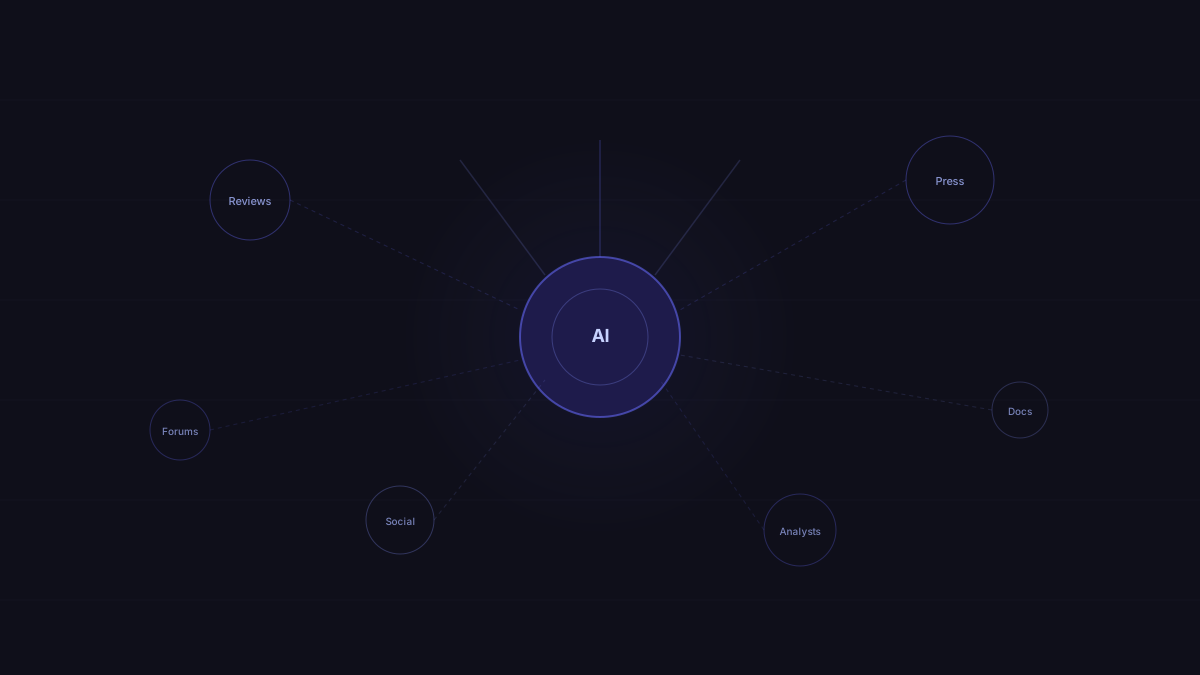
A citation, in this context, is any mention of your brand in an external source that AI models are likely to read: review platforms, editorial publications, industry blogs, comparison sites, analyst reports, forums, and social content that gets indexed. Your own website doesn't count. The signal comes from third-party sources because that's primarily what AI models treat as evidence about who you are.
A velocity calculation looks at the number of new citations in the current period minus the number in the previous period, often normalized to account for your existing citation baseline. A brand with 5,000 existing citations picking up 100 new ones in a week has a lower velocity than a brand with 500 existing citations picking up 50 new ones.
The pattern of velocity matters as much as the raw number. A sudden spike in citations after a product launch or media moment is different from a sustained month-over-month increase. Both can affect AI visibility, but on different timelines and through different mechanisms.
Why velocity predicts AI recommendation changes
The connection between citation velocity and AI visibility comes down to how different AI systems use third-party content.
For retrieval-augmented models like Perplexity, the link is direct. When a user asks a question, the model retrieves recent web content and synthesizes an answer from it. If your citation count has grown, more indexed sources mention your brand, and those sources are more likely to be retrieved when the query is relevant. Velocity changes in citation count can affect Perplexity outputs within days of the new citations being indexed.
For closed models with fixed training data, like standard ChatGPT without browsing, the mechanism is slower but still real. These models retrain periodically, and each training cycle reflects the web's accumulated content up to a cutoff date. Brands that have accumulated a higher density of favorable mentions by the time of a training cutoff are more likely to be positively represented in that model's weights.
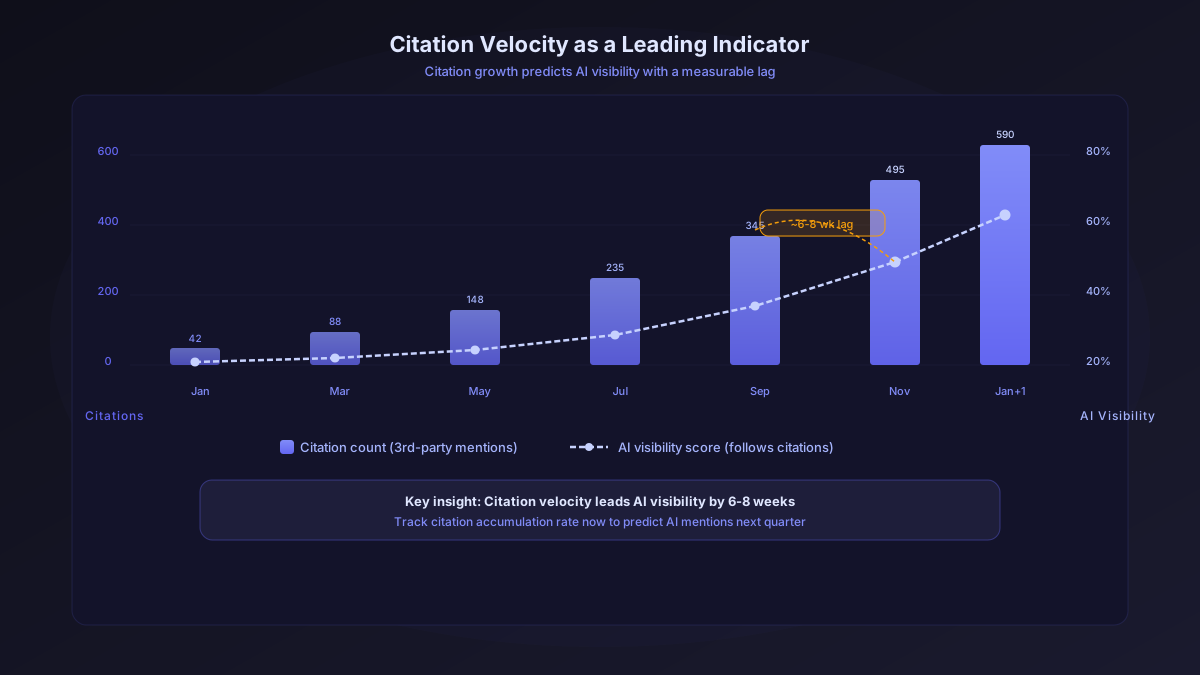
The predictive value comes from the lag. By the time a model update rolls out and your visibility scores change, the citation pattern that caused the change is already weeks or months old. Monitoring citation velocity gives you advance warning that your visibility is likely to shift, with enough lead time to either prepare to capitalize on it or investigate why it's happening.
How to measure citation velocity
The core measurement is straightforward: count new indexed mentions of your brand in third-party sources over time and track the rate of change.
Several inputs feed a useful citation velocity calculation.
Web mentions across editorial and publishing domains capture the long-form content that AI models tend to weight heavily. Tools like Google Alerts, Mention, or Brand24 can monitor when your brand name appears in newly indexed content. The key is consistency: measuring the same way each period so velocity trends are comparable.
Review platform activity captures new reviews, responses, and comparative mentions on G2, Capterra, Trustpilot, and similar sites. These platforms are heavily represented in AI training data and retrieval results. A burst of new reviews signals that your brand is generating active discussion, which models tend to interpret as social proof.
Forum and community mentions in places like Reddit, Hacker News, and industry-specific communities carry weight with retrieval models. Perplexity, in particular, surfaces Reddit content frequently. The velocity of new community discussion about your brand is worth tracking separately from editorial mentions.
Analyst and structured data sources include Gartner, G2's research reports, and similar structured comparison content. These tend to carry higher per-mention weight in AI outputs than casual editorial mentions.
When calculating velocity, look at weekly new mentions across these sources and track the four-week rolling trend. A consistent upward trend across multiple source types is a stronger signal than a spike in one category.
Citation velocity isn't symmetric. Negative citation velocity, where the rate of new mentions is declining, doesn't immediately hurt AI visibility, because the accumulated base of existing citations remains in training data and indexed content. But sustained decline over multiple months is a leading indicator of future visibility erosion, especially as models retrain and older, less-cited content falls in relative weight.
Practical examples
Consider three scenarios where citation velocity produces actionable intelligence.
A B2B software company launches a new feature in October. A press release goes out, and several tech publications cover it. Citation velocity spikes for three weeks, then returns to baseline. For retrieval models, this produces a short-term boost in AI visibility for queries related to the new feature. For closed models, the spike may or may not fall within the next training window. If it does, the feature becomes part of the model's understanding of the product. If it doesn't, the effect on closed-model visibility may be minimal.
The lesson: for closed models, the timing of coverage relative to training cutoffs matters. Sustained coverage over multiple months is more reliable than a single spike.
A brand gets included in a major analyst report in a competitive category. This generates a lower volume of new citations than a viral product launch, but the sources citing the report are high-authority publications and industry blogs. Citation velocity increases modestly, but the quality of the new citations is high. AI models, particularly in professional and enterprise research contexts, tend to weight analyst citations heavily.
The lesson: citation velocity should be weighted by source quality, not just volume. Fifty mentions in trade publications matter more than 500 mentions in low-authority directories.
A competitor launches an aggressive content campaign and starts appearing in comparison articles that previously featured your brand. Your citation velocity holds steady, but the competitive share of citations shifts. In relative terms, your brand is accumulating a smaller fraction of the category's total citations.
The lesson: citation velocity is most useful in competitive context. Tracking your velocity alongside your competitors' gives you a relative view that absolute counts miss.
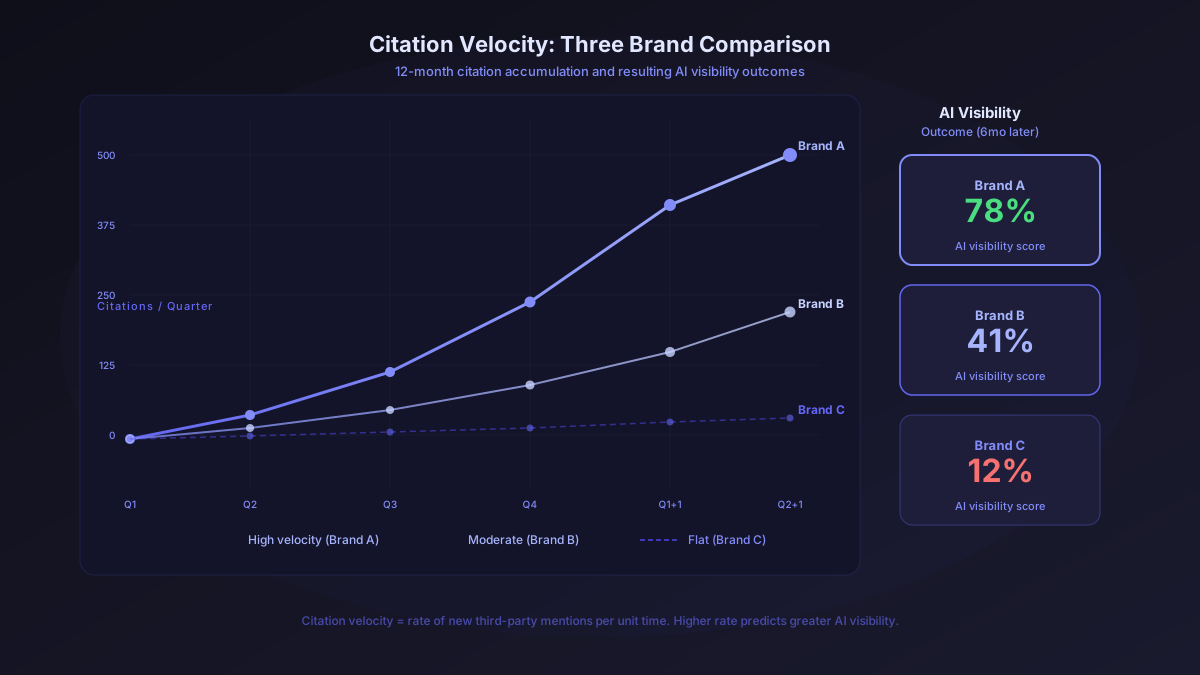
How citation velocity fits into a broader measurement framework
Citation velocity is a leading indicator, not a replacement for direct AI visibility measurement. Both are necessary.
Direct measurement tells you where you stand right now: how often your brand appears across AI models, in what context, and how that compares to competitors. Citation velocity tells you where you're likely to stand in the weeks and months ahead.
Used together, they create a more complete picture. If your direct AI visibility scores are strong and your citation velocity is also rising, you have momentum. If your direct scores are strong but velocity is declining, you may be living off an accumulated base that's not being reinforced. If your velocity is rising sharply but your direct visibility scores haven't yet responded, you have a leading indicator of improvement.
The most actionable pattern is a divergence between a competitor's rising velocity and your own flat trend. That's a signal worth investigating before it shows up in the recommendation data.
See where your brand stands in AI search
Track how ChatGPT, Gemini, Perplexity, and Claude recommend your brand vs competitors.
Start tracking freeWhaily tracks both direct AI visibility outcomes and the third-party citation signals that predict where visibility is heading. Watching both metrics in the same dashboard makes it easier to connect cause and effect, and to act before changes in AI recommendations have already moved pipeline.
FAQ
How is citation velocity different from traditional link building metrics? Traditional link building tracks backlinks to your website, which affect search engine ranking. Citation velocity tracks third-party mentions of your brand name across any indexed content, regardless of whether those mentions link back to you. Many of the sources that influence AI visibility don't use hyperlinks: forum posts, analyst reports, and review site profiles often mention brands without linking to them.
What's a meaningful velocity number to target? There's no universal benchmark because velocity is relative to your category and current citation base. A more useful starting point is tracking your own trend over time and comparing it to two or three direct competitors. Sustained quarter-over-quarter growth in velocity, combined with strong visibility in the categories you care about, is the pattern to aim for.
Can negative press coverage affect AI visibility through citation velocity? Yes. AI models don't filter for sentiment when ingesting training data or retrieving sources. A high velocity of negative citations, such as a product recall, a pricing controversy, or a high-profile customer complaint, can influence how AI models frame your brand. Citation monitoring should track sentiment, not just volume.
How long does it take for a citation velocity increase to show up in AI visibility scores? For retrieval models, the lag is short: one to three weeks after new citations are indexed. For closed models, the lag depends on the model's retraining schedule, which is typically not publicly disclosed. Three to six months is a reasonable working assumption for closed model effects to materialize.
See where your brand stands in AI search
Track how ChatGPT, Gemini, Perplexity, and Claude recommend your brand vs competitors.
Start tracking free