A reasonable question that keeps coming up in customer conversations: should we abandon keyword research and switch to NCI-based content planning?
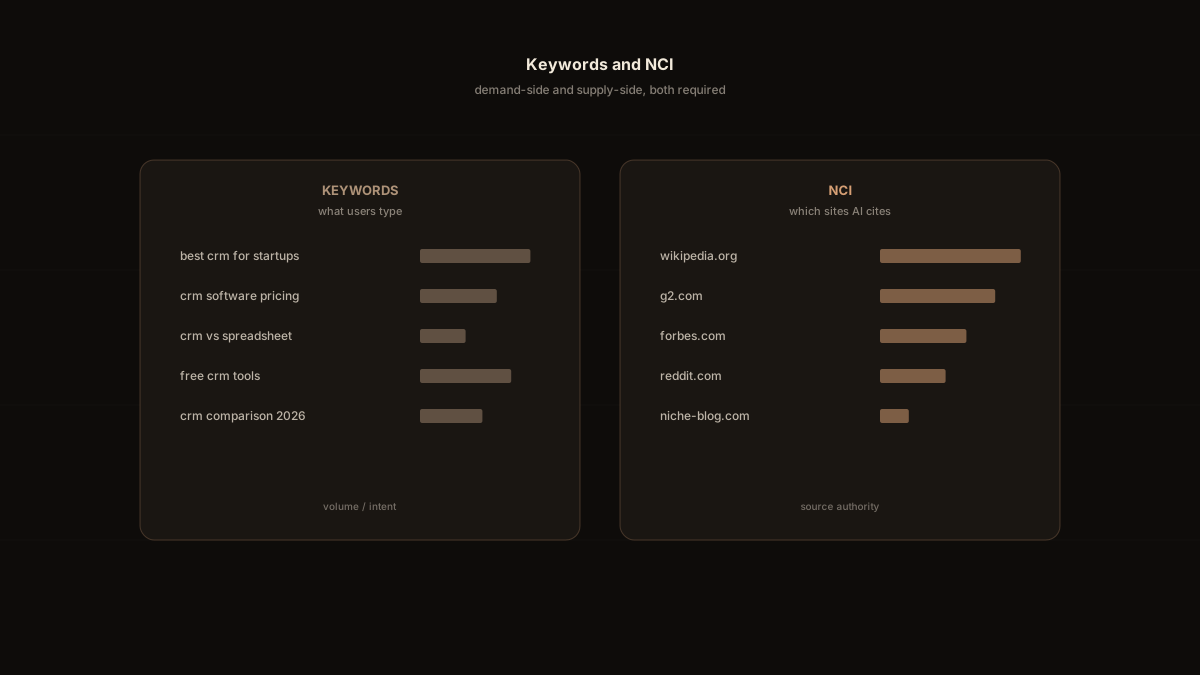
The short answer is no, and the framing of the question is part of the problem. Keywords and NCI measure different things. One tells you what your buyer types. The other tells you which sources shape the AI answer they read. Both are inputs to content strategy, and neither replaces the other.
This post walks through why the substitution framing is wrong, what each metric actually answers, and how a content team should use them together without doubling the work.
The category error
Asking whether NCI replaces keywords is like asking whether a thermometer replaces a calendar. Both produce numbers. Both can inform planning. They measure entirely different phenomena and combining them sensibly is the actual skill.
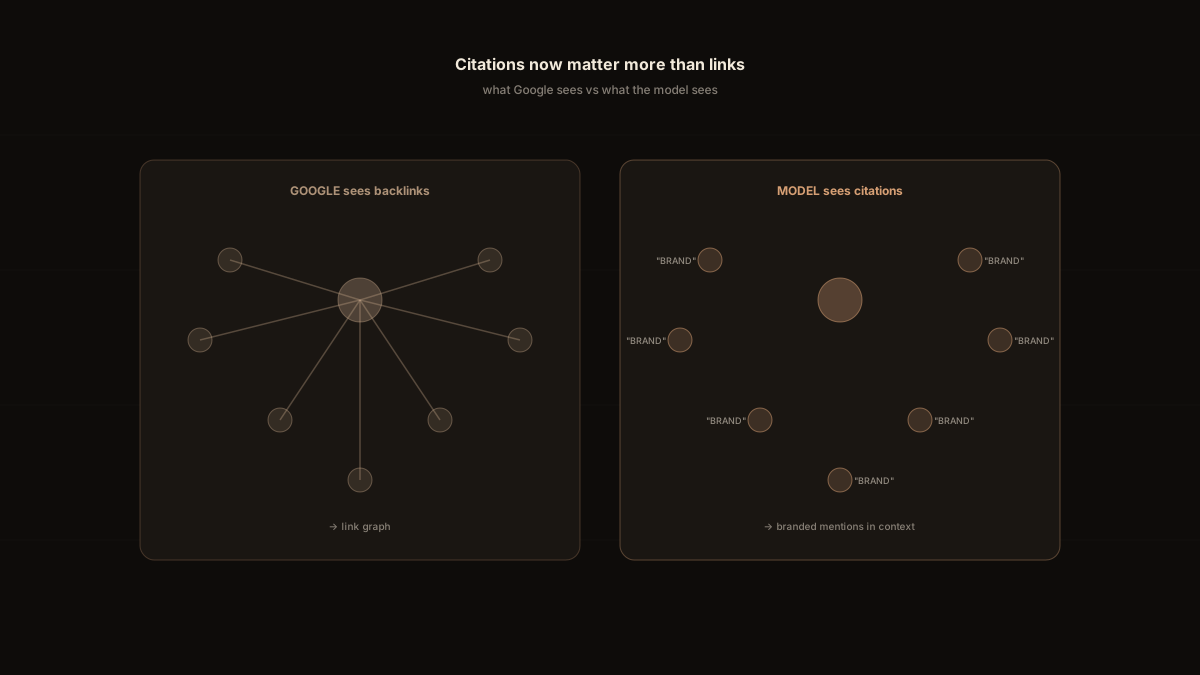
Keywords are a measurement of demand-side language. The phrase a person types into a search box, voice assistant, or chat interface. Keyword volume tells you how many people are typing a given phrase. Keyword intent tells you what they want when they type it.
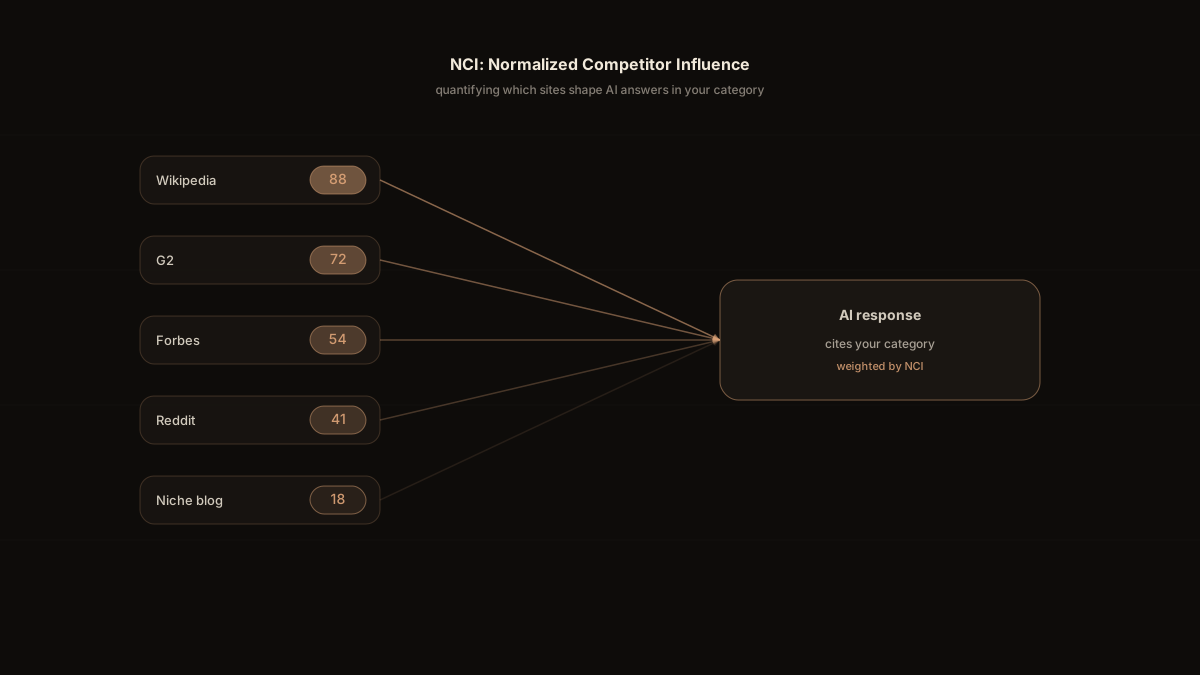
NCI (Normalized Competitor Influence Score, as defined in Whaily's methodology) is a measurement of supply-side authority. The score quantifies how much a given third-party site shapes AI responses in your category. NCI is on the source, not on the search term.
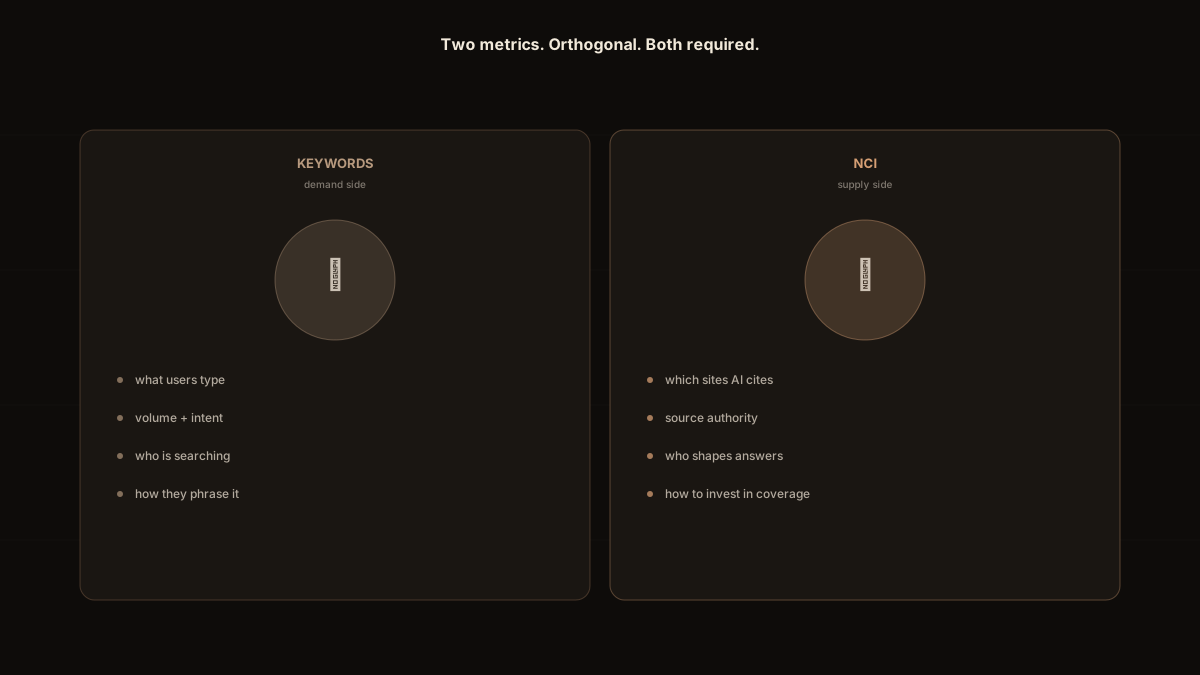
These are orthogonal. You can have a high-volume keyword that no AI engine answers using authoritative sources (rare, but possible in emerging topics). You can have a high-NCI source that drives AI responses to a query nobody is typing into a keyword tool. The two metrics correlate weakly at best, because they measure different sides of the discovery problem.
A useful mental check: if your team starts a planning conversation with "what keywords should we target," they are doing demand-side planning. If they start with "which sources do AI engines trust in our category," they are doing supply-side planning. Real content strategy needs both.
What keyword research still answers
Treat the obituary for keyword research with suspicion. Several questions only keyword research answers well.
What language does my buyer use? Even when the buyer types their question into ChatGPT instead of Google, they use approximately the same vocabulary. Keyword research tells you which phrases come up, which synonyms cluster together, and which problem statements buyers actually articulate.
What is the search volume distribution in my category? You still need to know whether a topic has 10,000 monthly searches or 100. Not because volume directly equals AI traffic (it does not), but because high-volume topics generally indicate where buyer attention is concentrated. AI visibility for a topic nobody asks about does not move pipeline.
What competitive landscape exists for a given query? Keyword tools tell you which sites currently rank for a query and how strong their backlink profiles are. This is still meaningful context, even though the AI answer for the same query may pull from a different set of sources.
What intent does a query carry? Informational, navigational, transactional, commercial. Intent classification is a well-understood feature of keyword tools and it remains useful for AI visibility work because intent shapes how the AI engine constructs the response.
In short, keyword research answers questions about what buyers want and how they ask for it. None of that disappeared. It is just no longer the whole picture.
What NCI adds
NCI fills in the layer keyword research never covered: which sources are shaping the answers AI engines give to those keyword queries.
When a buyer types "best CRM for early-stage startups" into ChatGPT, the engine retrieves a set of sources, summarizes them, and returns an answer. Keyword research tells you that the query exists and is informational with high commercial intent. NCI tells you which third-party sites are doing the heavy lifting in shaping the actual answer the buyer reads.
That distinction matters for content investment decisions. If you publish a beautifully optimized post for the keyword "best CRM for early-stage startups" but the AI engine's retrieval pool prefers G2, Capterra, and three industry publications you have no presence on, your post is not in the answer. Knowing the source landscape, which NCI gives you, lets you decide whether to invest in being one of those sources, in cultivating relationships with them, or in chasing a different query.
NCI also lets you see how the source landscape differs from your Google ranking. A category where Google rewards thin "X vs Y" comparison content and AI engines reward analyst reports has very different content investments. Keyword tools alone do not surface this difference.
How to use them together
The combined workflow is not complicated, but most teams do not do it because they were trained to start with one or the other.
Start with keywords to identify the topics that matter. Same as you would today. Cluster them by intent. Prioritize by buyer relevance, not by raw volume.
For each priority topic, layer in the NCI view. Look at the AI responses for the queries in that cluster. Which sources are cited? What are their NCI scores in your category? Are any of them sources where you have existing relationships, presence, or coverage potential?
This combined view changes your content brief. Instead of writing "a post optimized for the keyword cluster," you are writing "a post that has a real chance of being one of the sources retrieved for this cluster, in a market where the dominant retrieval sources are X, Y, and Z."
The brief now includes:
- The keyword cluster (from keyword research)
- The intent and search behavior (from keyword research)
- The current top-cited sources (from NCI data)
- The source authority pattern in the category (from NCI distribution)
- Your gap relative to those sources (from gap analysis)
The content team writes the same kind of post they always did. The strategy team makes better decisions about which posts are worth writing.
Two failure modes when teams use only one
The first is the keyword-only team. They have a long backlog of keyword clusters and they ship content prolifically. The content is well-optimized for traditional SEO and not particularly competitive in AI engine retrieval. Visibility on Google is solid. Visibility in AI answers is flat. Leadership concludes "AI search does not matter for us" because the team is measuring with a tool that does not see it.
The second is the NCI-only team. They have a clear picture of which sources dominate citations in their category and they are running editorial outreach to them. But the team has no view of which queries the buyer actually uses, so they are investing in sources whose dominant queries do not match their buyer's actual evaluation behavior. They win citations on the wrong searches.
The first team optimizes for buyers who do not type into Google anymore. The second team gets cited for buyers who never typed those queries.
Both teams are doing real work. Both are blind on one side. The combined workflow corrects both errors.
See where your brand stands in AI search
Track how ChatGPT, Gemini, Perplexity, and Claude recommend your brand vs competitors.
Start tracking freeThe honest comparison
For specific tasks, here is how the two compare:
For estimating the scale of an opportunity, keyword research is better. Volume is a real measurement of how many people are asking the question.
For deciding what to write about, keyword research is better. It tells you what buyers want.
For deciding what to write to actually be seen, you need NCI alongside keywords. The keyword tells you the topic; NCI tells you whether you can realistically be in the response.
For identifying where to earn third-party coverage, NCI is better. Keyword research does not see this layer at all.
For predicting whether a piece will rank on Google, keyword research and backlink data are still your tools. NCI tells you almost nothing about Google rankings directly.
For predicting whether a piece will be cited in AI answers, NCI is more predictive than keyword research, though neither is conclusive on its own.
In short, the two metrics answer different questions and work best as inputs to different decisions in the same workflow.
What to stop doing
Two patterns to actively kill.
The first is content briefs that mention only keywords. A 2026 brief that does not name the source landscape the content needs to compete with is incomplete. The keyword tells you the topic; the source landscape tells you the bar.
The second is content briefs that mention only citation targets. A brief that ignores keyword research because "we are tracking AI now" is also incomplete. Knowing which sources are influential without knowing what buyers ask is a strategy for being cited for the wrong questions.
The fastest way to integrate both is to add two fields to your existing brief template: "top three currently-cited sources for this topic" and "where we have potential to earn coverage to compete with them." That keeps the keyword-first workflow intact and adds the layer that was missing.
Where to start if you only have one today
If you have strong keyword data and no NCI view, start by pulling AI responses for your top twenty keywords. Look at the sources cited. Note their NCI in your category if you have access to the measurement, or rank them informally if you do not. This gives you a starting picture without changing your existing workflow.
If you have NCI data and weak keyword discipline, run a basic keyword audit. Cluster the queries that map to your top NCI sources' content. You will likely find gaps where you have no content addressing real buyer questions, even though you are working on the right sources.
The integration takes a quarter. The reasoning behind it is permanent: demand-side and supply-side measurement are both required. Neither replaces the other.
FAQ
Can NCI eventually replace keyword research? Unlikely, because they measure different phenomena. The demand side (what buyers ask) and the supply side (which sources shape the answer) are both real and both load-bearing. A future tool may combine them more seamlessly, but they will still be conceptually distinct inputs.
Is keyword volume still meaningful for AI visibility? Indirectly. Volume tells you where buyer attention is concentrated, which is where AI engines have built more retrieval depth. High-volume topics generally have more developed source landscapes than long-tail topics, but the correlation is loose.
How does Whaily show NCI alongside keywords? The platform presents per-topic source authority data (NCI) and per-keyword AI visibility data in a combined view, so content briefs can reference both without two separate workflows.
What if my category is too new for either to be useful? In emerging categories, keyword volume is often low and source authority is unsettled. The leverage is high but the measurements are noisy. The work is still worth doing because you are building the source landscape early, but expect more uncertainty in the data.
See where your brand stands in AI search
Track how ChatGPT, Gemini, Perplexity, and Claude recommend your brand vs competitors.
Start tracking free