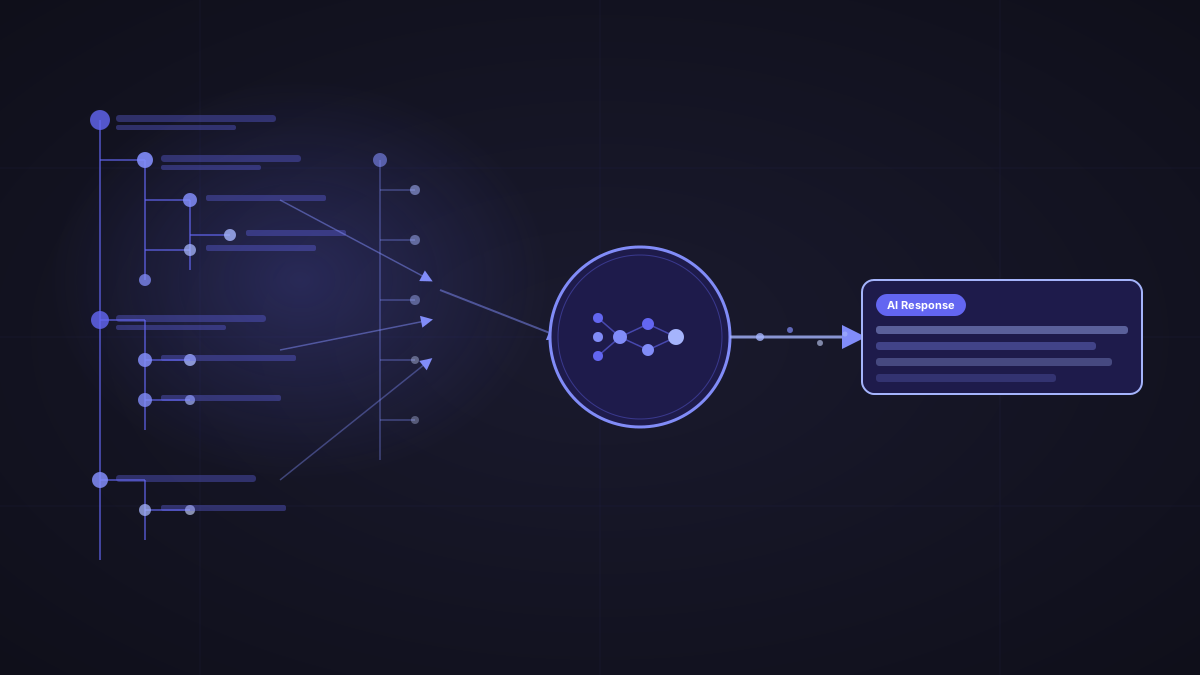

Why do ChatGPT, Claude, Gemini and Perplexity so often describe a software brand using language that sounds like it came from a G2 review rather than the brand's own homepage? Because it usually did. AI models treat review platforms as higher-trust sources than brand-owned content, and that preference shapes which products get recommended and how they get described.
Most software companies put serious effort into their website copy and update their G2, Capterra or Trustpilot profile once a year, if that. That is the wrong order of priority for AI visibility. Review platforms aggregate independent opinion at scale, stay current, and get cited or trained on more heavily than a company's own marketing pages. Fixing that gap starts with understanding why it exists.
Why AI models trust review platforms over brand websites
AI models are trained on enormous volumes of web content, and that training process develops something like a sense of source credibility. Review platforms score well on several fronts at once: verified user accounts, moderated submissions, opinions aggregated from many independent contributors instead of one, and content that gets refreshed continuously rather than sitting static for years.
A brand's own website teaches a model one thing: how the company wants to be described. A platform like G2 teaches a model something different: how real users describe the product's strengths, weaknesses, and fit. When a model characterizes a tool as "better suited for mid-market teams than enterprise" or "strong on integrations but light on reporting," that phrasing usually traces back to aggregated review language rather than brand positioning.
The sources AI engines actually cite
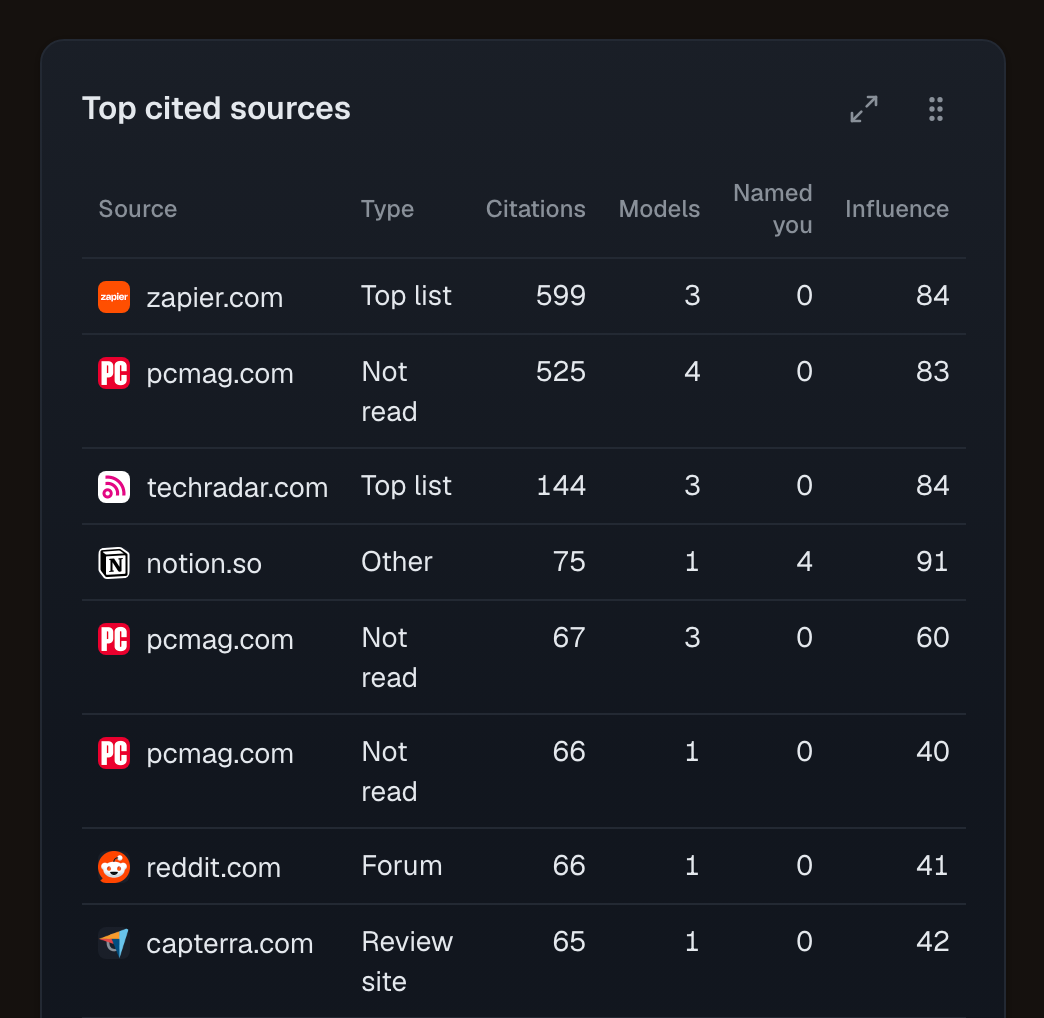
Independent citation-tracking research published through 2026 gives a consistent picture of where AI answer engines pull from. Reddit, Wikipedia, YouTube and a small set of review and community platforms account for a large share of citations across ChatGPT, Perplexity, Gemini and Google AI Overviews, even though each platform weights them differently. Perplexity in particular leans on retrieval-based citation, pulling from Reddit and video platforms at query time rather than relying only on what it learned during training.
Review sites fit this pattern for the same structural reasons: they are large, frequently updated, and dense with the kind of specific, first-person language that a model can lift directly into an answer. A brand's own site rarely gets cited the same way, because it reads as promotional rather than descriptive.
The review platform consolidation changes the landscape
The review site ecosystem itself is consolidating in ways that make this more consequential, not less. In January 2026, G2 announced it would acquire Capterra, Software Advice and GetApp from Gartner, a deal that closed in February 2026. The combined company now controls four of the largest B2B software review platforms under one roof, spanning millions of verified reviews and thousands of software categories.
G2 has been explicit that the acquisition is meant to strengthen its position in AI-driven discovery, not just traditional search. That same quarter, G2 introduced a new "AI Search Visibility Optimization Tools" category, part of a wave of AI-focused categories the platform rolled out between February and April 2026. Fewer, larger review platforms with deeper AI ambitions means the profiles on those platforms carry more concentrated influence over what AI models learn about a brand, not less.
What makes a review profile effective for AI visibility
Not all review presence is equal. A profile with 15 reviews from 2022 and no recent activity sends a different signal than one with 200 reviews spread across current use cases.
Recency matters most for retrieval-based models like Perplexity, which pull live content from G2 and similar platforms at query time. A profile with recent reviews gets retrieved; a stale one gets deprioritized. Training-based models are less time-sensitive per query, but they still benefit from platforms that get re-crawled and refreshed regularly.
Volume signals an established, active user base. A product with 500 reviews reads differently to a model than one with 30, independent of the average rating.
Specificity is where most brands leave signal on the table. A review that names a use case, a feature, an integration, or a team size teaches a model something precise. "Great for managing outbound sequences for a 10-person SDR team" does real work. "Five stars, love it" does not.
Category placement shapes which queries a product shows up in. G2 and Capterra organize products into category grids, and those grids define the competitive set a buyer, or an AI model, evaluates a product against. A product well placed in a secondary category can surface in recommendations that would otherwise never mention it.
Pricing accuracy is a specific, recurring failure point
One pattern worth calling out on its own: AI answers frequently misstate software pricing, and stale review-site listings are a common source of the error. When a vendor's plan is "contact sales" but a review directory still lists an old flat number, AI engines treat the directory's figure as fact because it looks like structured, sourced data. Pricing pages get updated on a company's own site and lag behind on G2, Capterra or GetApp for months, and when third-party listings disagree with the vendor's own site, models frequently side with the third-party consensus.
This is one of the more fixable problems in this whole category. It requires nobody's cooperation except the vendor's own outreach to the platform.
What to do
- Claim and complete every listing. G2, Capterra, GetApp, Software Advice and Trustpilot all offer a claimable vendor profile. An unclaimed or half-filled profile has less structured detail for an AI model to draw on, and no path for you to correct errors when they appear.
- Update pricing on every platform where you're listed, not just your own site. Check each listing quarterly at minimum. If a platform shows a number that no longer matches your current plans, request the correction directly through the platform's vendor tools rather than assuming it will sync automatically from your website.
- Run a recency check on your review volume. If your most recent reviews are more than a year old, that is a signal to act on. A structured ask to recently satisfied customers, tied to a specific outcome, such as asking whether they'd share a recent migration or rollout on G2, produces more useful, more specific reviews than a generic request blasted to your whole customer list.
- Audit your category placement. Log into each platform, check every category your product appears in, and compare that list against the kinds of queries a buyer might actually ask an AI model. Request additions where there's a real fit.
- Respond to reviews, especially negative ones. The response itself has limited direct effect on how AI models describe you, since the review content carries more weight than the reply. But responding well, and fixing the underlying issue, is what changes the content of future reviews, which is the part that actually shapes AI output over time.
How Whaily fits
Whaily tracks which sources AI engines cite when they describe your brand, so you can see whether your review platform presence is doing real work or quietly lagging behind. Pair that with sentiment tracking on how AI models currently characterize your product to spot the gap between your actual reputation and what's showing up in AI answers: see how citation source discovery works or read about sentiment analysis.