Three acronyms dominate AI marketing conversations: GEO, AEO, and LLMO. Vendors swap them freely. Consultants insist they are distinct disciplines. Blog posts argue over which one is "correct." If you have sat through a strategy session and felt the definitions shifting depending on who was speaking, you are not imagining it.
The confusion matters because imprecise language leads to imprecise strategy. When your team cannot agree on whether you are trying to influence AI training data, live retrieval behavior, or model-specific recommendation patterns, you end up optimizing for the wrong thing.
Here is a clear breakdown of each term, where they overlap, and which framing is most useful for your team.
GEO: Generative Engine Optimization
GEO was coined by researchers at Princeton in a 2023 paper and adopted quickly by the marketing community.
The "generative engine" framing is specific. It refers to AI systems that generate prose answers to queries rather than returning a ranked list of links. ChatGPT, Gemini, Perplexity, and Claude all qualify. Traditional Google results, even those with featured snippets, are not generative in this sense.
GEO asks one question: how do you make your brand more likely to appear in AI-generated answers?
The original research identified content authority and structure as the primary levers. Content that is well-cited, demonstrates expertise, uses clear definitions, and reads in a way that is easy for models to excerpt tends to surface more often in AI-generated responses. In controlled tests, adding authoritative statistics, quotations from credible sources, and structured explanations improved brand citation rates by meaningful margins.
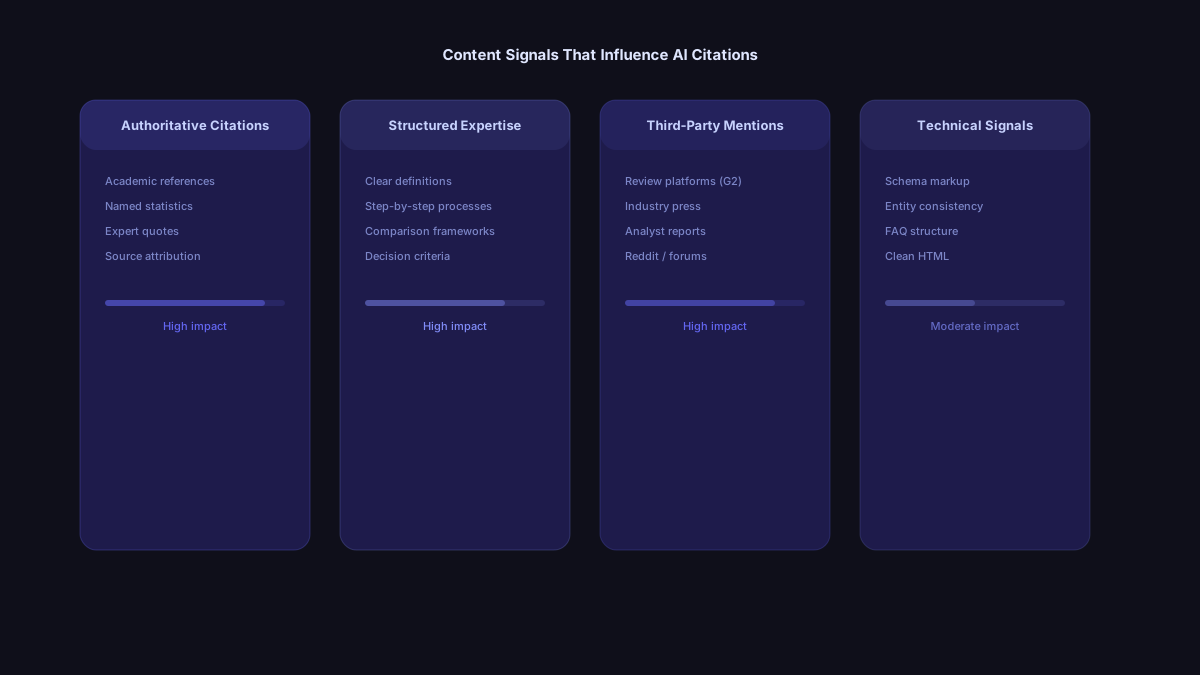
In practice, GEO work looks like this: writing content that answers questions directly and completely, earning mentions on authoritative third-party sites, and ensuring your brand is associated with the right topics across the sources AI models train on. It is less about keyword density and more about being a brand that deserves to be cited.
One caveat worth noting. GEO's effectiveness varies depending on whether the AI model you are targeting uses retrieval at query time or relies purely on training data. For closed models trained on a fixed corpus, GEO is about influencing what enters training data. For retrieval-augmented models like Perplexity, GEO also includes optimizing content that gets retrieved the moment a query is processed.
AEO: AI Engine Optimization
AEO predates the current wave of generative AI tools. It originally focused on voice search and answer engines, aiming to optimize for featured snippets, knowledge graphs, and Siri or Alexa results.
Its scope has since expanded to cover everything GEO covers, plus more. GEO targets generative text responses specifically. AEO encompasses the full range of AI-powered discovery surfaces: generative answers, AI-powered product recommendations, conversational interfaces embedded in apps, and agent-driven browsing where an AI acts on behalf of a user.
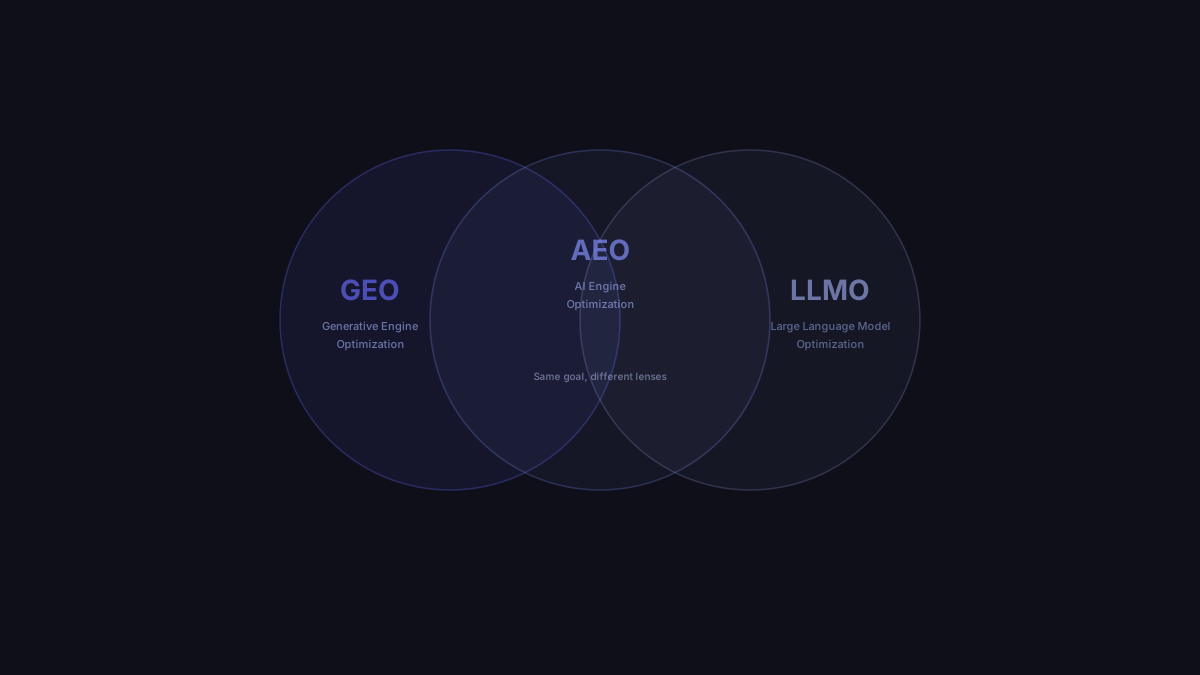
Think of AEO as the category. GEO is a specific discipline within it.
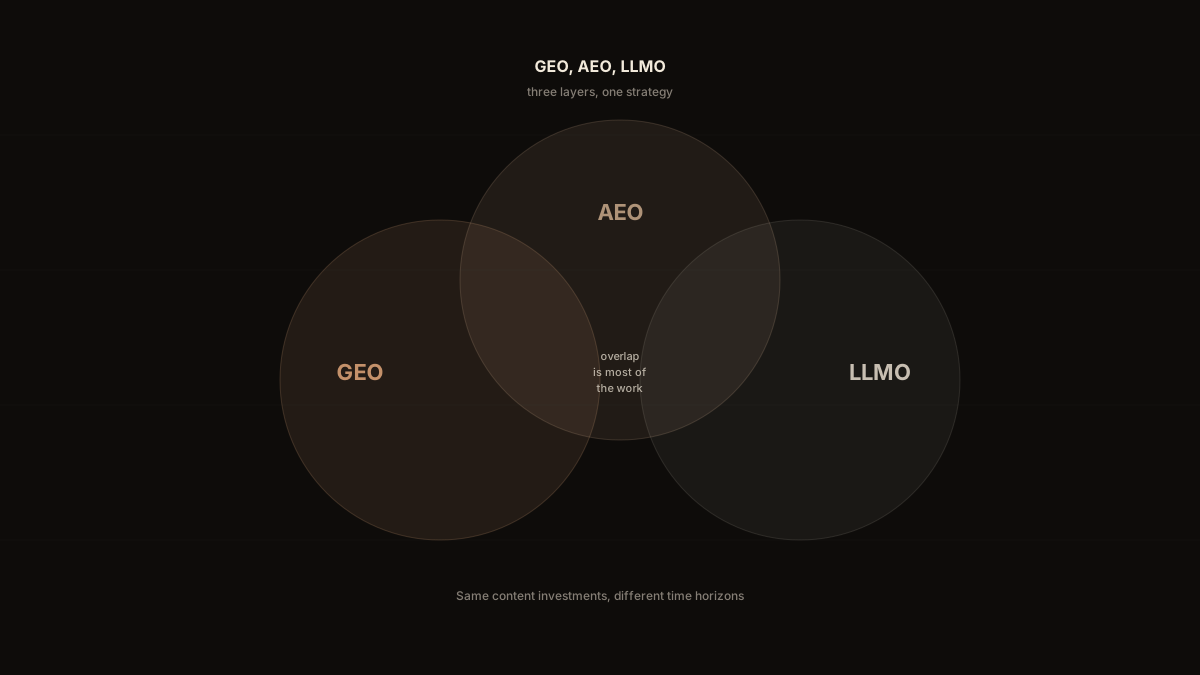
GEO, AEO, and LLMO describe overlapping territory, not competing frameworks. Many practitioners use AEO as the umbrella term, GEO to mean optimizing for AI-generated answers, and LLMO to mean model-specific optimization. All three appear interchangeably in the wild. What matters is that your team defines what you mean before you start measuring it.
The practical difference between AEO and GEO shows up with non-text AI surfaces. If an AI-powered shopping assistant surfaces products based on review data, or a voice assistant reads a specific answer format, that falls under AEO territory. Much of AEO strategy overlaps with structured data optimization: schema markup, clear entity definitions, and consistent NAP data for local businesses. These help AI systems understand and represent your brand accurately.
For most B2B brands, the distinction is academic. The AI surfaces that matter in B2B are almost entirely generative text interfaces, which means GEO and AEO converge in practice.
LLMO: Large Language Model Optimization
LLMO is the most technically specific of the three terms. It focuses on a dimension the other two often skip over: different models behave differently.
Where GEO assumes a relatively uniform "AI answer," LLMO starts from a simple observation. GPT-4o, Claude Sonnet 4, and Perplexity often produce different recommendations in response to identical queries. They were trained on different data, at different times, with different approaches to alignment and instruction following. Their retrieval systems, where they exist, pull from different sources with different freshness windows.
LLMO asks: how do you understand and influence your brand's position within specific models?
The honest answer is that direct model-specific optimization is difficult. The training processes of most commercial models are opaque. You cannot submit content and guarantee it enters GPT-4o's training corpus. But indirect levers exist, and they matter more for some models than others.
For models that use live retrieval, Perplexity being the clearest example, fresh authoritative content has a faster feedback loop. A piece of coverage in a major industry publication can show up in Perplexity responses within days. For closed models with fixed training cutoffs, the same coverage may not appear in responses for months, or not at all until the next model refresh.
Some models also show distinct preferences in how they frame recommendations. One may emphasize price-to-value comparisons. Another may default to well-known enterprise options. A third may surface community-endorsed tools. LLMO practitioners study these behavioral differences systematically, sampling responses across models over time to find where a brand is strong and where gaps remain.
Where the terms overlap (and why it matters less than you think)
The levers you pull are largely the same regardless of which acronym you prefer.
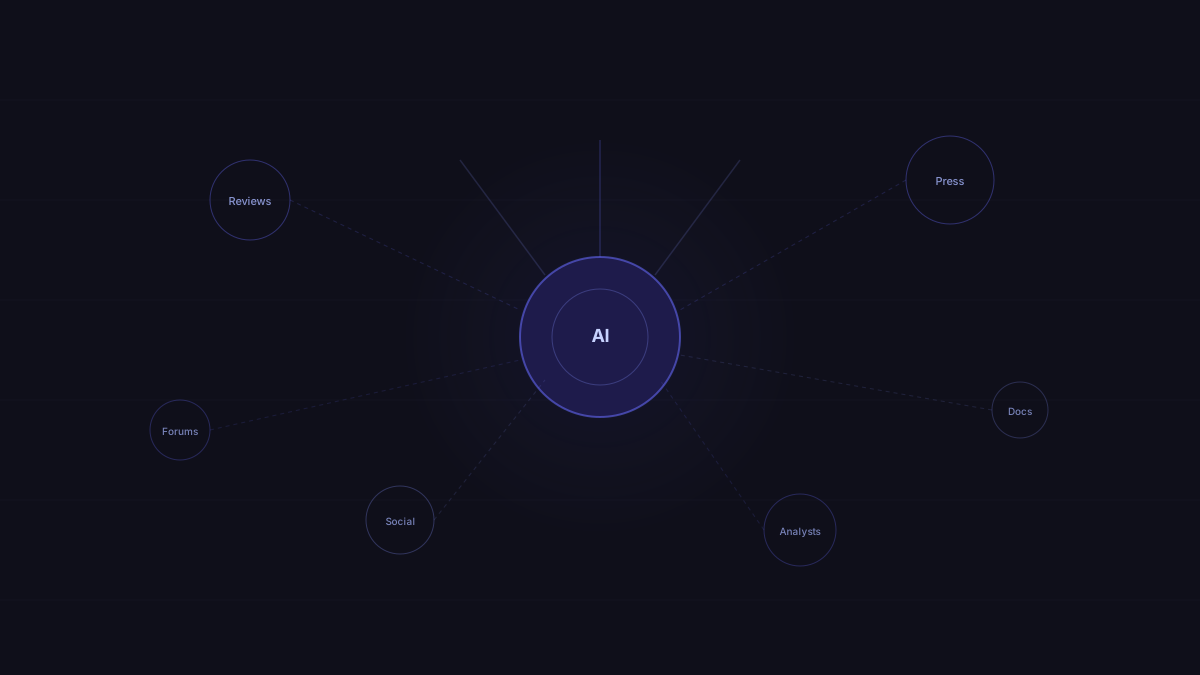
Create content that establishes your brand's expertise in your category. Earn citations in sources that AI models trust: industry publications, analyst reports, review platforms, technical documentation, and active forums. Describe your brand consistently in terms that match how buyers frame purchasing decisions. Track what AI models actually say about you rather than guessing based on SEO performance.
GEO research points to content authority. AEO best practices point to structured data and broad web presence. LLMO practitioners study model-specific behavior. All three roads lead to the same underlying work: being a brand that AI systems have good reason to recommend, across the sources that train and inform those systems.
Measuring what you are optimizing for
This is where terminology differences stop being academic. Without systematic AI visibility measurement, you are operating blind. It does not matter whether you call your practice GEO, AEO, or LLMO.
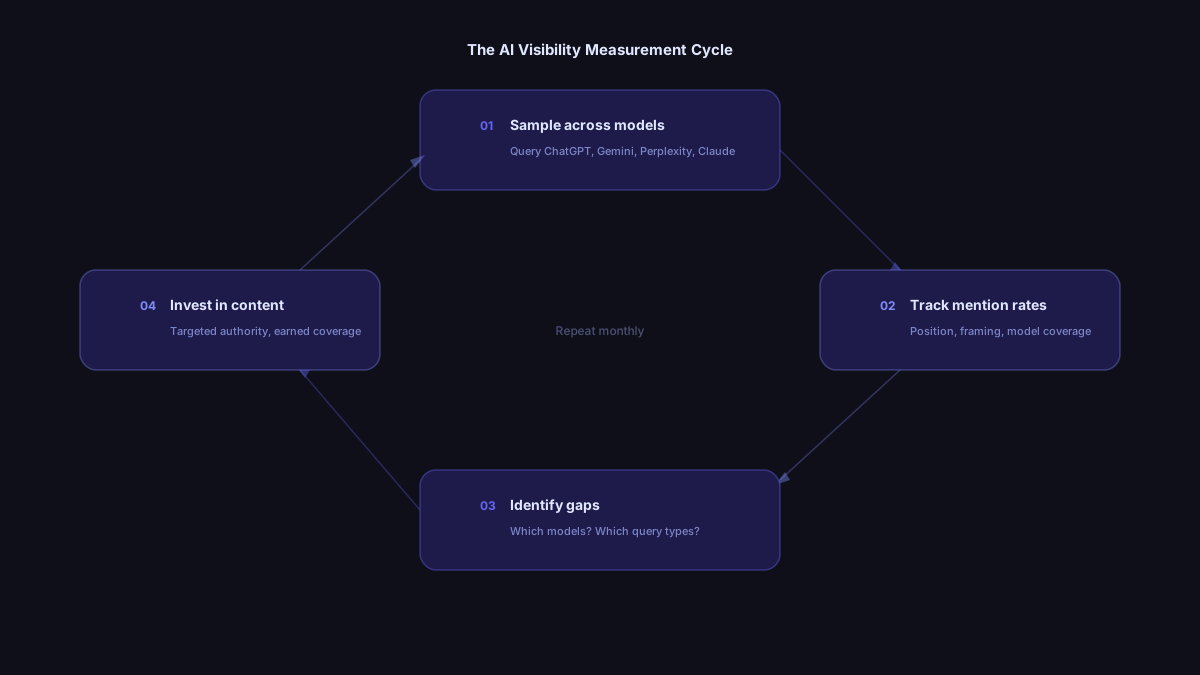
Measurement means sampling responses from multiple models, across representative queries in your category, and tracking how often and how prominently your brand appears. It means understanding which models recommend you and which do not. It means seeing how your position changes after publishing a major piece of content or earning a significant press mention.
See where your brand stands in AI search
Track how ChatGPT, Gemini, Perplexity, and Claude recommend your brand vs competitors.
Start tracking freeWithout this kind of tracking, you cannot tell whether your content investments are working. You cannot tell whether a new model update helped or hurt you. You are left with anecdotes ("I searched on Perplexity and we showed up") rather than a baseline you can improve against.
Which term should your team use?
Use whichever term your audience understands. Writing a technical blog post for an AI-native audience? GEO or LLMO will land with precision. Presenting to a CMO who came up through traditional marketing? AEO is the most accessible framing because it maps onto familiar territory. AI Engine Optimization feels adjacent to Search Engine Optimization.
For internal strategy, the most useful framing is the most specific one available. Track AI visibility across models. Understand which sources inform each model's recommendations. Invest in the content and earned presence that drives citation rates. Whether you call that GEO, AEO, or LLMO is a branding decision for your team, not a strategic one.
The substance beneath all three terms is the same. In a world where AI models make recommendations to buyers in your market, your brand's presence in those recommendations is a measurable business metric. The name you give that metric matters less than whether you are tracking it.
FAQ
Which term is the most commonly used? AEO is the broadest and oldest, and it appears most often in mainstream marketing content. GEO has strong academic backing from the Princeton research and is common in technical writing. LLMO is less widespread but growing among teams focused on model-specific measurement.
Do I need to treat GEO separately from my SEO strategy? They share some inputs. High-quality, authoritative content benefits both. But the measurement approach and optimization levers differ. AI visibility requires sampling across multiple models and query phrasings, while SEO focuses on a single search engine's ranking signals. Track them separately.
Can I optimize for one model without affecting others? Mostly no. The levers that improve your position with one model (better content, more authoritative citations, accurate third-party coverage) tend to improve your position across models because the underlying sources overlap. Model-specific work is more about diagnosing gaps than running distinct strategies per model.
See where your brand stands in AI search
Track how ChatGPT, Gemini, Perplexity, and Claude recommend your brand vs competitors.
Start tracking free