A marketing director I talked to last week had a chart open on the second monitor. Direct traffic up. Organic clicks down. Branded search steady. Total sessions roughly the same.
"It looks like nothing happened," she said. "But every single content team is freaking out."
This is what Google AI Overviews looks like in the analytics now. Not a cliff. A slow tilt. The cliff is in CTR, not visits. And it lives one click before your site ever shows up in a logfile.
What Google actually did this time
There have been three or four moments since 2024 where someone declared AI Overviews "the end of SEO." Most of those were rollouts that affected a slice of queries in a slice of geographies for a slice of users.
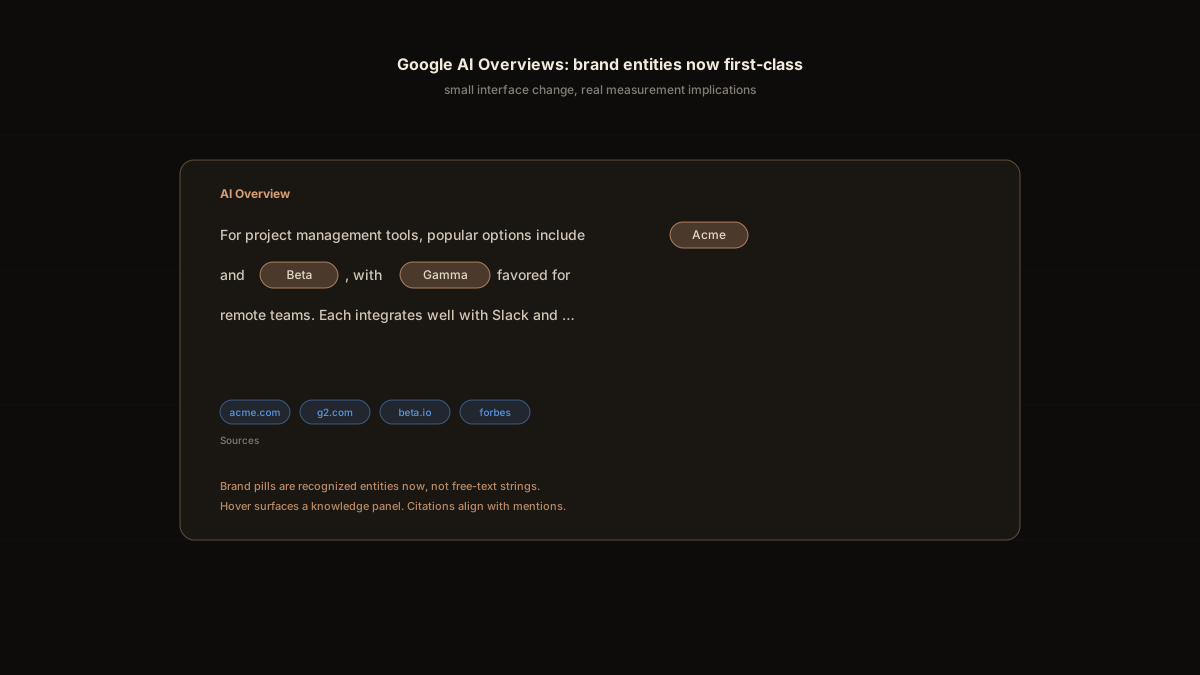
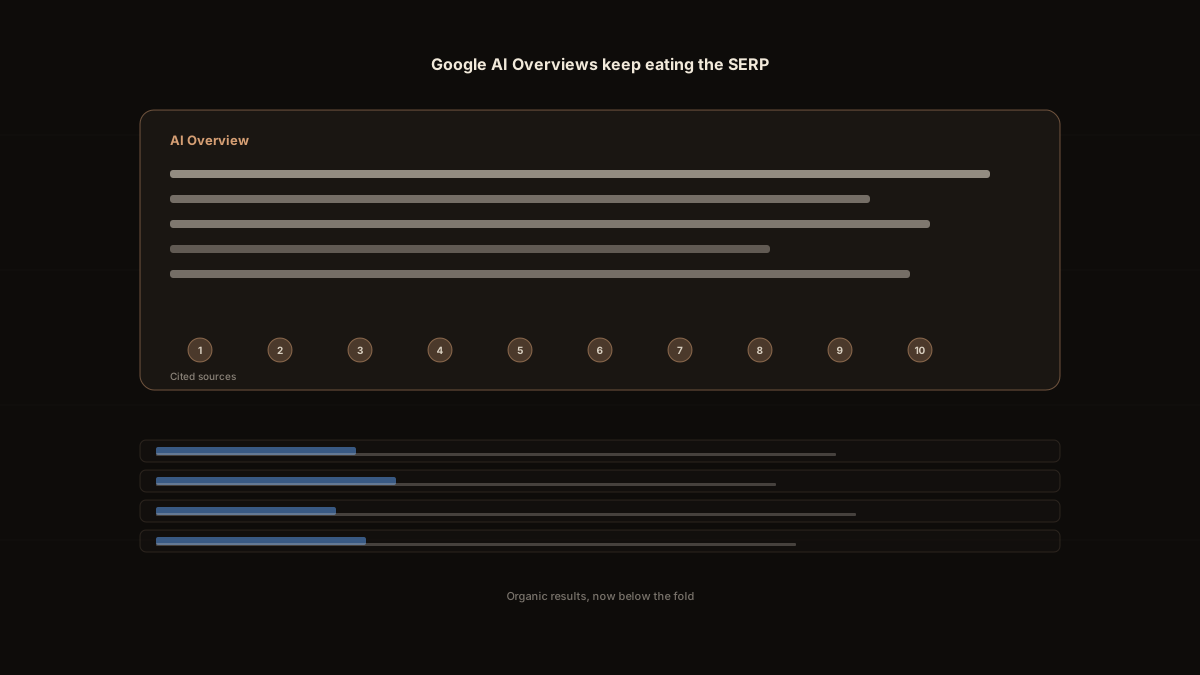
The May rollout is different in degree, not kind. AI Overviews now appear on the majority of informational queries in English, in most of Google's logged-in surfaces, including mobile. They sit above the organic results, often consume the first scroll, and are now drawing in content from a broader set of source URLs per answer.
The practical change is that the first thing a logged-in mobile user sees for an informational query is a paragraph of generated text with three to seven cited sources. Sometimes one of those sources is yours. Most of the time, even for queries you rank for, it is not.
"Changed everything" is doing a lot of work
The phrase deserves some scrutiny. Plenty of things have not changed.
Money queries, the bottom-funnel ones where people are about to buy, still mostly route through traditional results. Local intent queries still surface maps and businesses, not paragraph answers. Branded queries still show your homepage at the top. If your buyer journey runs through a comparison post that they read after they have already heard of you, AI Overviews are not the existential threat your CEO read about on LinkedIn.
What has changed is the top of the funnel. The wide queries. "How does X work." "What is Y." "Best Z for [use case]." These are the queries where AI Overviews are now eating the click. Not eating all clicks. Eating the share of clicks that previously belonged to position 2 through 10.
A practical way to think about it: if you used to write top-of-funnel explainer content and feel good when a piece reached position 5 for a fat-head term, the value of that position 5 in 2026 is about half of what it was in 2024. Position 1 still gets clicks. The middle of the SERP got hollowed out.
Your content team's intuition that "this piece ranks but nothing happens with it" is correct. The middle of the page no longer generates the traffic it used to. Pieces that used to be useful at position 4 are now ornamental.
Which categories got hit hardest
The pattern in the early data is uneven and worth being honest about.
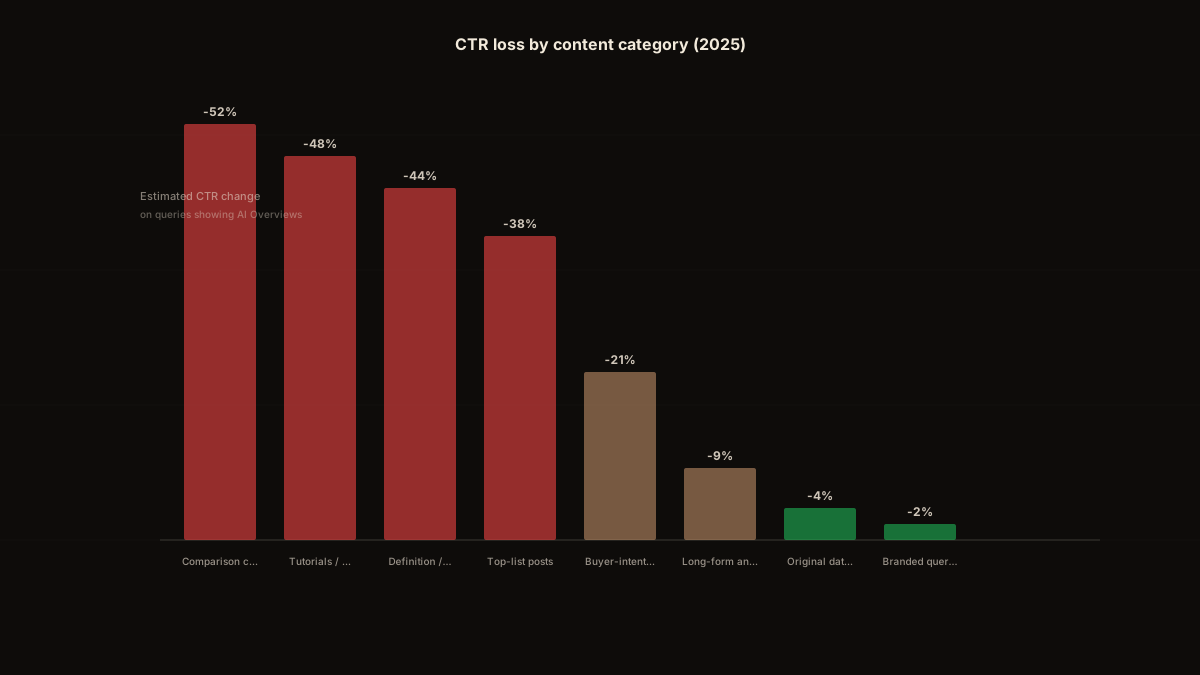
Software comparison content. The "best X for Y" queries that whole content programs were built around. AI Overviews now surface a three-to-five vendor answer with citations to two or three of the heaviest review sites, and a stretched paragraph that summarizes the rest. The position 4 review post that used to capture intent traffic is now a footnote.
How-to and tutorial content. Anything that can be summarized in three steps. The Overview answers the question in the SERP and the user closes the tab. Your beautiful tutorial post does not get the visit, though it might get cited.
Definition and explainer posts. These were always thin, and now Google generates them on demand.
What has held up better: long-form analysis with original framing, anything with first-party data, comparison posts that go deeper than a feature matrix, and content that benefits from being read in context rather than skimmed in summary.
The CTR number nobody wants to publish
There has been a flood of vendor blog posts citing CTR drops between 18% and 60% depending on whose data set you read. The honest number is that nobody has a clean before/after because the rollout has been gradual and the queries that get Overviews are not the queries that did not.
What we can say:
For queries that consistently show an AI Overview in 2026 and did not in 2024, organic CTR is roughly half. The top click still has a click. Positions 2 through 5 lost the most.
For queries that never show an Overview (most transactional, most branded, most local), CTR is approximately unchanged.
The total decline at the site level depends entirely on the mix. A site whose traffic was dominated by informational top-of-funnel queries is in real trouble. A site whose traffic was already weighted toward commercial and branded intent is mostly fine.
What being cited gets you
Some of the conversation about Overviews assumes that the click was the goal. For top-of-funnel queries, the click was a proxy for awareness. If the user reads your brand name in the Overview, sees the citation, and never visits the site, you arguably got the awareness without the visit. The trade is real but it is not nothing.
Two things follow from this.
The first is that being cited in the Overview is now the visibility win for many top-of-funnel queries. Click-through from the citation is a bonus. Brand recognition from the citation is the durable signal.
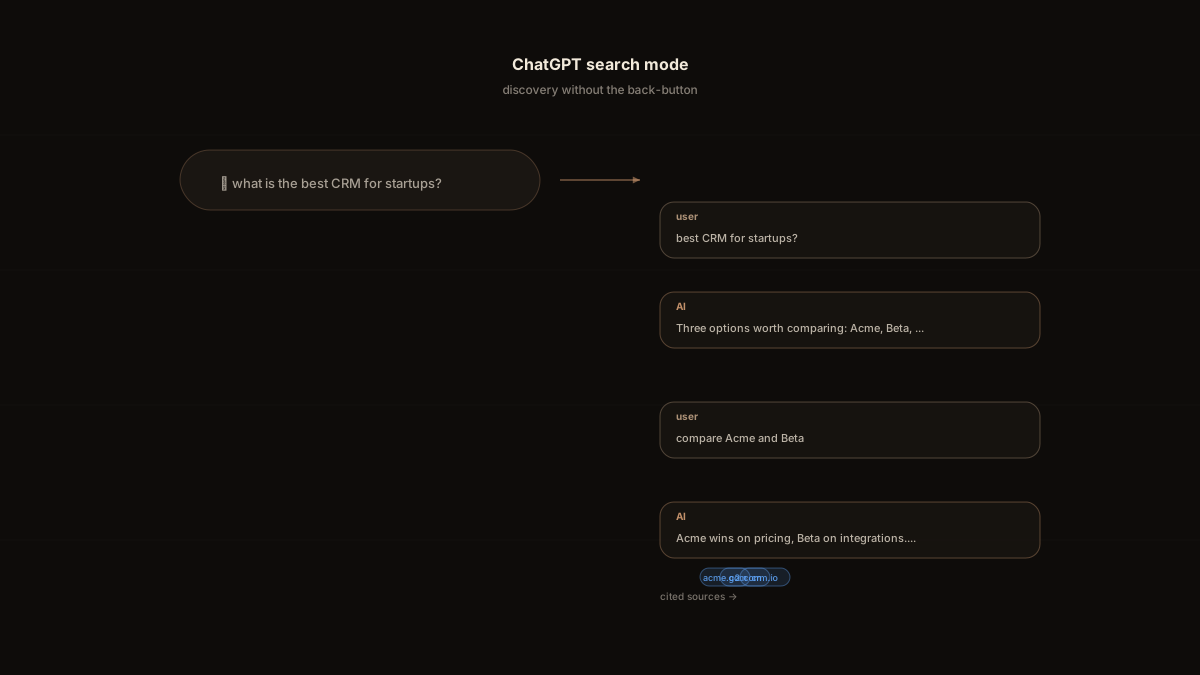
The second is that the measurement problem changed. You cannot tell from Google Search Console alone whether you are being cited. You have to look at the Overview content, query by query, and measure presence in the paragraph and the source list. This is the same measurement problem AI answer engines like ChatGPT and Perplexity created. AI Overviews just dragged it into Google.
See where your brand stands in AI search
Track how ChatGPT, Gemini, Perplexity, and Claude recommend your brand vs competitors.
Start tracking freeWhat to do this week
A list of small things, not a plan to overhaul your content program.
Pull the top fifty queries that drove traffic to your site last year. For each, manually check whether the SERP shows an AI Overview in 2026. Tag them. You now have a list of high-stakes pages that need a different strategy.
For the queries with Overviews, check whether you are cited. If you are, the citation is your win. Keep the content fresh and structured. If you are not, the question is whether the page can be rewritten to be the kind of source the model prefers (specific, authoritative, structured) or whether the traffic is gone and the page can be repurposed.
For the queries without Overviews, treat them as you always did. Most transactional and branded traffic still works.
Lastly, set up some form of recurring measurement across the AI answer surfaces beyond Google. The same content team that wins the citation in Google AI Overviews is usually the team that wins citations in ChatGPT and Perplexity too. The reverse is also true. If you cannot see what is happening on those surfaces, you cannot react to it.
What probably comes next
AI Overviews will expand. Google has signaled this and the data trajectory backs it up. The share of queries showing an Overview will grow, the answers will get more comprehensive, and the SERP below them will continue to compress.
The interesting question is whether Google starts paying out for citations, the way Perplexity has experimented with revenue sharing. The economics of publishers being mined without compensation for the inputs to a system that replaces their traffic is unresolved. Something will give. Probably more slowly than the loudest takes suggest.
In the meantime, the work is not glamorous. It is to know which of your pages are still doing work, accept that some are not, and adjust the editorial calendar accordingly.
A useful exercise: print the dashboard your marketing director was staring at. The "nothing happened" view. Look at it next quarter. The shape of the curve in there is the real story.
FAQ
Are AI Overviews showing for all queries now? No. The expansion in May 2026 covers most English-language informational queries in logged-in surfaces. Transactional, branded, and local queries are largely unaffected.
Did clicks drop equally across positions? No. Position 1 still receives most of its historic share. The middle of the page (positions 2 through 8) took the steepest cuts.
Should we delete content that lost traffic? Mostly no. Some pages are now valuable as citation sources even without direct traffic. Audit before you prune.
Does this change the AEO playbook? It expands it. The work to be cited in an AI answer is now also the work to be cited in a Google AI Overview. They overlap more than they differ.
See where your brand stands in AI search
Track how ChatGPT, Gemini, Perplexity, and Claude recommend your brand vs competitors.
Start tracking free