Perplexity has launched a paid enterprise tier that includes, among other features, a brand analytics dashboard. For the first time, a major AI search platform is offering native data on how often specific brands are cited in its responses. The move is notable not just for what it provides, but for what it signals about where the market is heading.
What the enterprise tier includes
The Perplexity enterprise offering targets teams and organizations rather than individual users. It includes higher rate limits, team management features, and SSO support. The brand analytics dashboard is the most strategically significant addition.
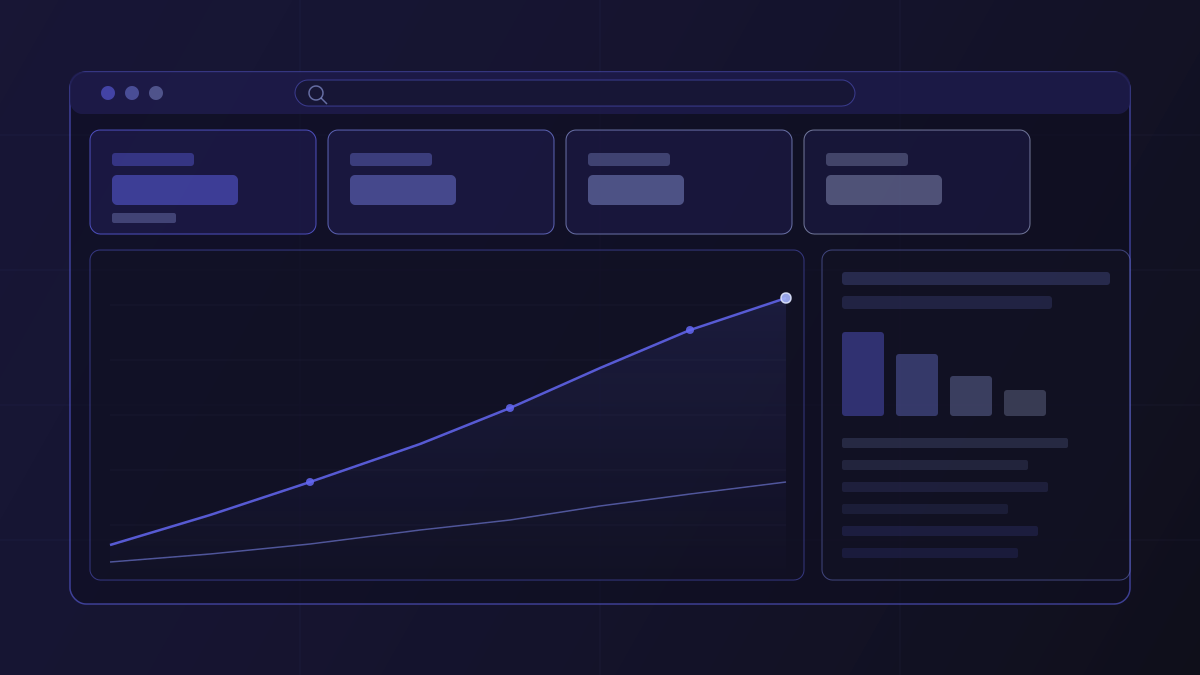
According to Perplexity's announcement, the dashboard surfaces three primary data points. First, citation frequency: how often a brand name appears as a cited source in responses, broken down by time period. Second, query category attribution: which categories of user queries are generating those citations. Third, source attribution: which URLs from a brand's web presence are being cited when the brand appears.
The citation frequency metric is the most immediately actionable. It gives brand teams a quantitative view of how often Perplexity pulls from their content. Query category breakdown adds context, showing whether a brand is being cited primarily for product questions, support content, or broader thought leadership. Source attribution shows which specific pages are earning citations, which helps content teams prioritize what to produce or update.

Why this is significant
Perplexity is the first major AI search platform to offer native brand visibility data. That's a meaningful milestone. Until now, brands trying to understand their AI search presence had two options: run queries manually and record what they see, or use third-party monitoring tools. Neither approach gives you data that comes directly from the platform.
Native data has inherent advantages. It's comprehensive rather than sampled. Perplexity can show citation counts across all its queries, not just the subset a monitoring tool happens to test. It's also more granular at the source level, because Perplexity has direct access to which URLs its retrieval system pulled when generating each response.
The launch also signals that AI search platforms are starting to recognize brand measurement as a commercial product. If Perplexity can charge enterprise customers for visibility data, other platforms will eventually follow. ChatGPT, Gemini, and Claude don't currently offer this kind of dashboard. That gap won't last indefinitely.
Perplexity's citation model, where every response shows its sources, has always made it more transparent than other AI search platforms. The enterprise analytics dashboard is a natural extension of that transparency into a commercial offering. The platforms that don't show sources have a harder path to building equivalent native analytics.
The limitations of single-platform data
The Perplexity dashboard is a useful tool, but it has a structural constraint that brands should understand clearly: it only covers Perplexity.
Perplexity processes hundreds of millions of queries per month, which is significant volume. But it represents a fraction of the total AI-assisted search market. ChatGPT has 400 million weekly active users. Gemini is embedded in Google Search. Microsoft Copilot ships inside every Microsoft 365 subscription. A brand's Perplexity citation data tells you nothing about its presence in any of those ecosystems.
This matters because different AI platforms produce different recommendations. A brand that's frequently cited in Perplexity responses may be largely absent from ChatGPT answers, and vice versa. Perplexity's retrieval-first architecture means it draws heavily on current, well-indexed content. ChatGPT's closed model relies more on training data, giving it a different view of which brands are authoritative. The two platforms can and do produce different brand recommendations for the same query.
Relying on a single platform's native analytics creates a false sense of comprehensive visibility. The brands that benefit most from Perplexity's dashboard will be those using it as one data source among several, not as a proxy for their overall AI search presence.

What it signals about market direction
The enterprise analytics launch is an early indicator of a broader shift. AI search platforms are maturing from consumer-facing novelties into infrastructure that businesses depend on for discovery and recommendation. When that happens, the platforms need to offer measurement capabilities, because enterprise buyers demand accountability from the channels they invest in.
Google built an advertising empire on the back of Search Console and Analytics giving webmasters and marketers the data to understand their performance. The AI search platforms are starting to build equivalent data layers. Perplexity is first; others will follow.
For brands that have been investing in AI visibility work without much data to guide them, this trend is welcome. Platform-native analytics, even single-platform, are better than nothing. They create internal accountability and give marketing teams a number to report upward.
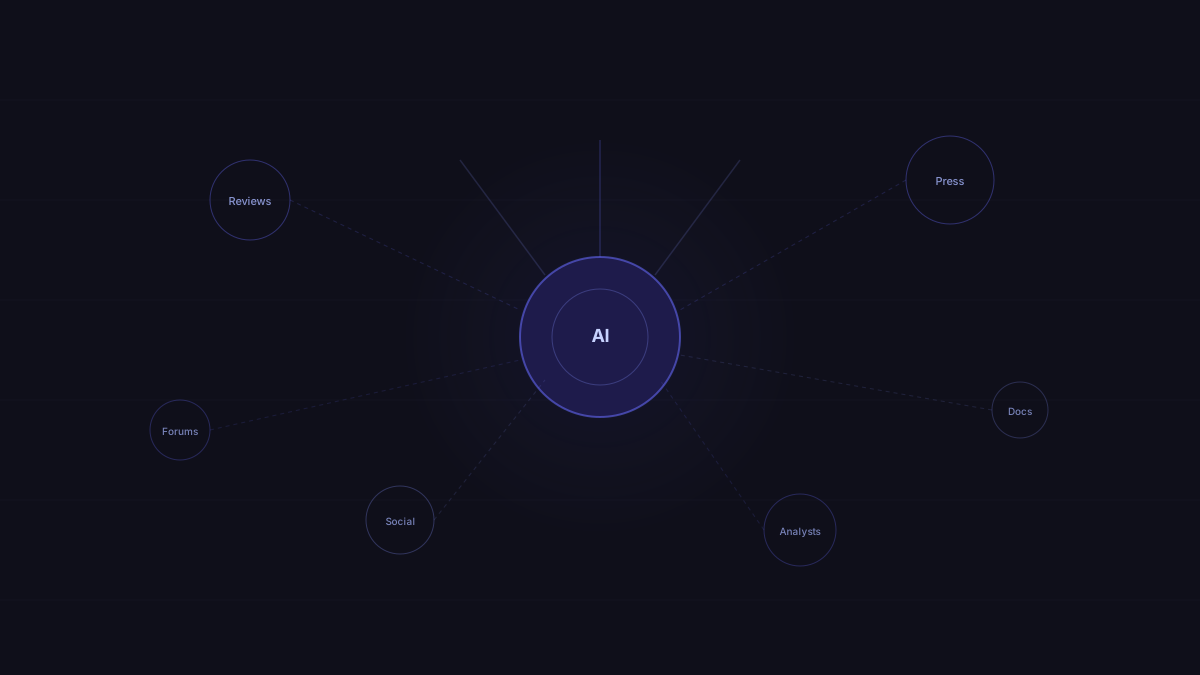
The gap that remains is cross-platform aggregation. Understanding your brand's presence across the full AI search ecosystem, rather than within a single platform's walls, requires querying multiple models systematically and tracking results over time. Whaily is designed for exactly that use case, running queries across ChatGPT, Gemini, Perplexity, Claude, and other models to build a multi-platform visibility picture.
See where your brand stands in AI search
Track how ChatGPT, Gemini, Perplexity, and Claude recommend your brand vs competitors.
Start tracking freeFAQ
Is the Perplexity brand analytics dashboard available on free or Pro accounts? The analytics dashboard is part of the enterprise tier, which is aimed at teams and organizations. Individual Pro accounts do not include brand analytics access.
How does Perplexity's native citation data compare to what third-party monitoring tools can provide? Native data is more comprehensive because it covers all queries, not a sampled subset. Third-party tools that test specific queries provide broader platform coverage (ChatGPT, Gemini, Claude) that Perplexity's own dashboard can't offer. The two are complementary rather than competing.
Should brands stop using third-party AI visibility tools now that Perplexity offers native data? No. Perplexity's native analytics cover one platform. Brands that care about their overall AI search presence need data across multiple models. Third-party monitoring tools that span platforms provide a view that no single platform's native dashboard can replicate.
Will other AI search platforms offer similar dashboards? Almost certainly, over time. Perplexity's move establishes that this type of data has commercial value in an enterprise context. ChatGPT, Gemini, and Copilot all have large enterprise user bases and the incentive to offer measurement capabilities. The timeline is unclear, but the direction is not.
See where your brand stands in AI search
Track how ChatGPT, Gemini, Perplexity, and Claude recommend your brand vs competitors.
Start tracking free