A consultant told me last month that SEO was dead. He had a slide deck. There were arrows. The arrows pointed downward, toward a small icon of a tombstone.
I asked him how his agency's clients were spending their budgets. He paused. "Mostly SEO retainers, honestly."
The thing about declarations of death is that they tend to come with retainers attached. SEO has been declared dead approximately once a year since 2003. The current round is louder because AI search is real and significant. The declaration is still wrong.
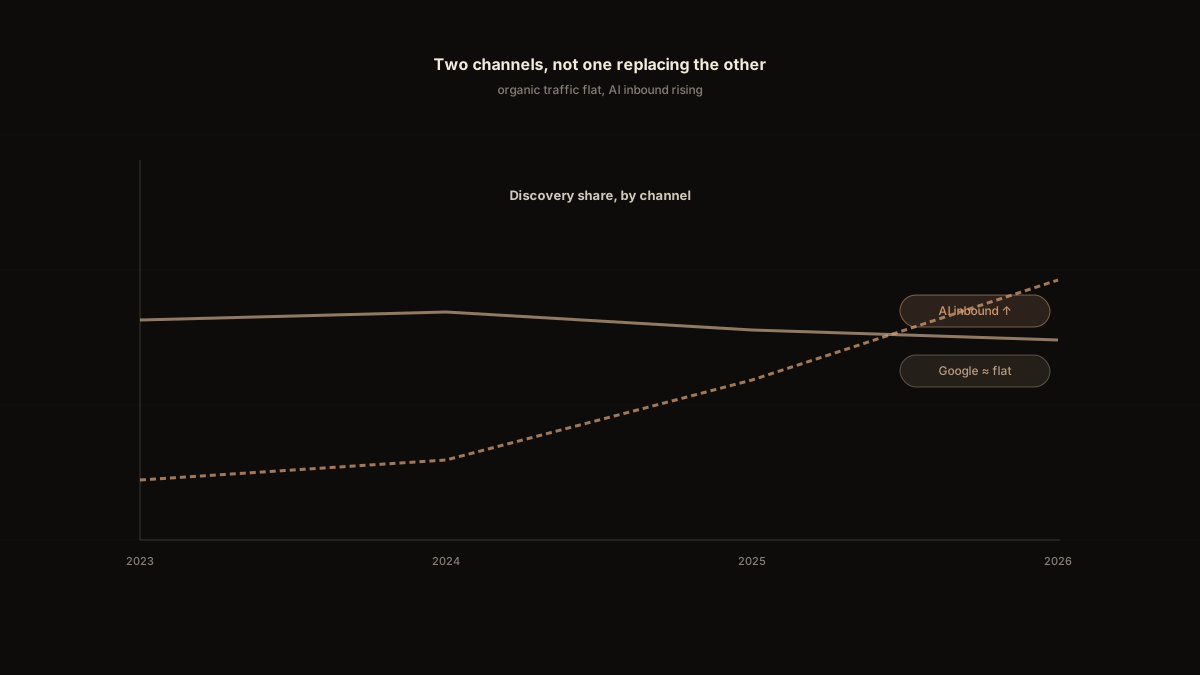
What is actually happening is more interesting than either "SEO is dead" or "AI search is overhyped." Both are reductive. The truth is that two largely independent discovery systems now coexist, and the right strategy depends on knowing which one your buyer is using when.
What the traffic logs actually show
Pull a real B2B SaaS site's analytics. Look at the last twelve months.
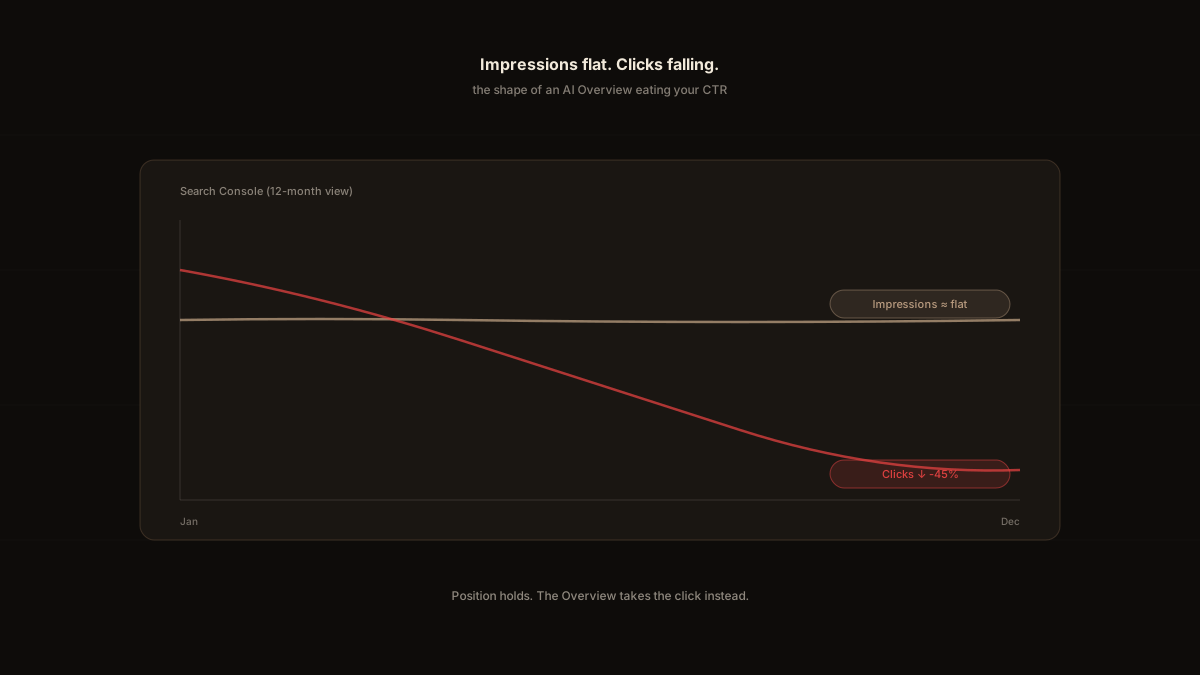
Organic traffic from Google: roughly flat to slightly down on top-of-funnel terms, basically flat on branded and middle-funnel. Conversion rate on organic traffic: largely unchanged. Total pipeline contribution from organic: down maybe 5-15% depending on the mix, but still by far the largest source.
Then look at the new lines you did not have a year ago. Direct traffic with no clear referrer. Sessions that match a pattern of "user already knew the brand name when they arrived." Conversions where the first touchpoint is "talked to a friend / read it somewhere / asked ChatGPT."
The story in those logs is not death. The story is that Google's share of total discovery is shrinking from very high to merely dominant. Some of the demand that used to route through ten blue links is now routing through AI answer engines, where the user reads a synthesized answer and arrives at your site already half-decided.
The brands that have been investing in AI visibility see their share of that new channel growing. The brands that have not are watching the new channel happen to other people.
SEO traffic is not collapsing in most categories. It is being supplemented by a new channel that some teams are positioned to win and others are not. That is a meaningful shift but it is not the death of the original channel.
Why "killed" is the wrong frame
The death framing fails on three specific points.
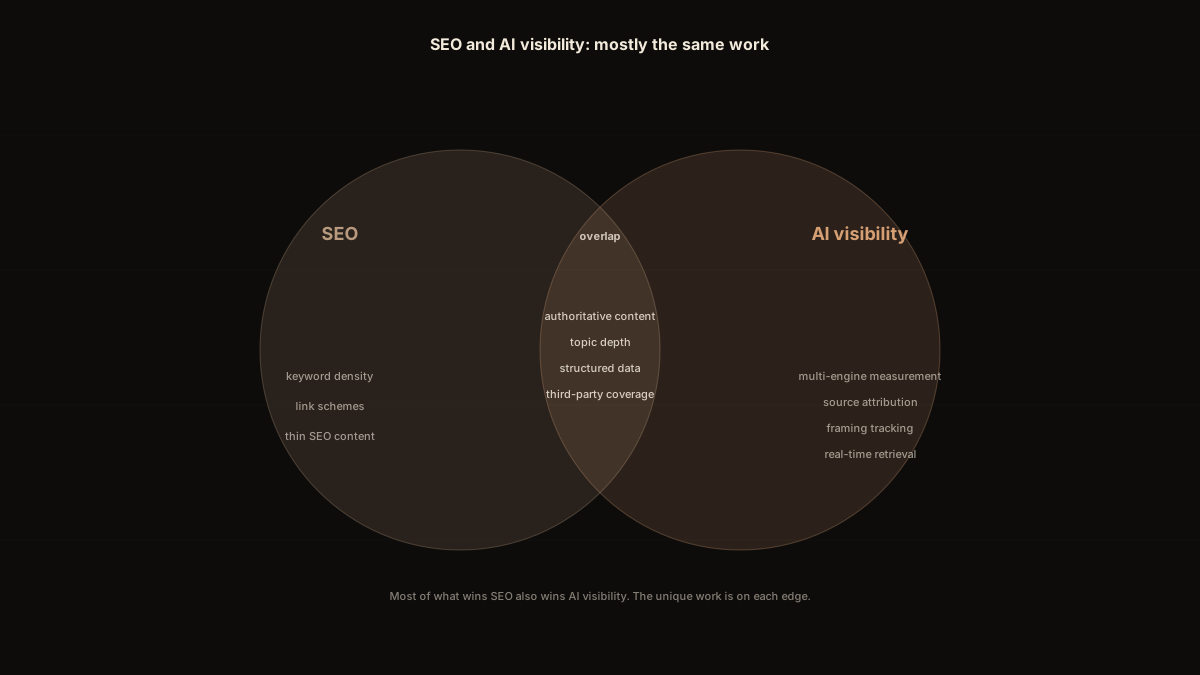
The first is that AI search and traditional search overlap more than the loudest takes suggest. The work that wins AI citations (authoritative content, structured data, third-party coverage, topical depth) overlaps heavily with the work that wins Google rankings. Teams that have been doing serious SEO for years are unusually well-positioned for AI visibility. Teams that have done lazy SEO are exposed in both.
The second is that user behavior is bimodal. Some queries route to AI answer engines. Some queries route to Google. Some users always use AI for evaluation. Some users never have. Most users use both depending on the query and their mood. A discovery strategy that picks only one is wrong by construction.
The third is that the economics of the underlying ecosystem are unresolved. Google still drives the majority of clicks for most categories. AI engines are still figuring out how to monetize. Publishers and brands are still figuring out how to invest. We are mid-transition, and predictions of where it ends up are not predictions, they are guesses dressed up as analysis.
The work that does both jobs
Most of what your SEO team has been doing well is also AI visibility work. Three examples.
High-authority third-party coverage. Editorial mentions in industry publications, analyst reports, and reputable media outlets. Drives backlinks, which Google cares about. Drives citation signal for AI engines, which is approximately why they retrieve a source. Same investment, two channels.
Topical authority through depth. A site with a tightly linked cluster of content on a specific topic ranks well on Google and gets cited by AI engines as a domain expert. The work to build it is roughly identical for both purposes.
Structured data and clean technical foundations. Schema markup, clean canonical URLs, fast page loads, mobile-friendly templates. Improves Google rankings. Helps AI engines identify and trust the content. Same investment, two channels.
The work that does not transfer well: keyword-density optimization, link-building schemes designed to game PageRank, thin "we wrote this to rank" content. The work that was bad SEO is also bad AI visibility work. The work that was good SEO is mostly good AI visibility work.
What is actually new
A few things really are new and need new work, not recycled SEO work.
Multi-engine measurement. Google rank trackers were a single number per keyword. AI visibility is a vector across multiple engines, each with different retrieval behavior. The measurement discipline is more complex, requires more infrastructure, and produces more nuanced answers. This is genuinely new tooling territory.
Source attribution work. Identifying which third-party sites are actually shaping AI answers in your category and investing in them deliberately. SEO has always cared about backlinks; AI visibility cares about who the model cites. The targets overlap but are not identical, and the diagnostic work is new.
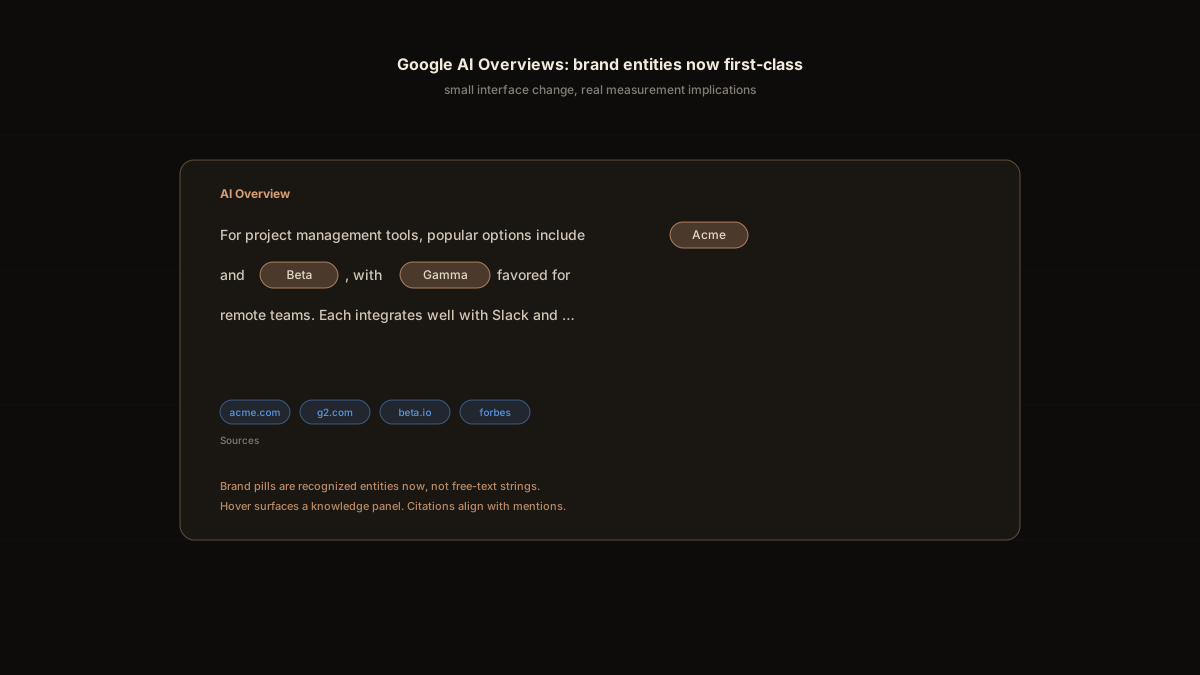
Framing and description tracking. AI engines do not just mention your brand, they describe it. The description can hurt or help your positioning. Tracking the description across engines and queries is a discipline classical SEO did not have.
Real-time retrieval awareness. Some AI engines pull live data, some do not. Your visibility on a "freshness-sensitive" engine like Perplexity depends partly on publication recency in ways that classical SEO does not.
The new work fits alongside the existing work. It does not replace it.
The bimodal buyer
The most useful frame I have seen comes from a marketing director at a logistics tech company. Her buyer journey looks like this:
The buyer hears about a category at a conference or from a peer. They do a couple of Google searches to confirm the category exists and read a high-level explainer. They open ChatGPT and ask for three vendors to evaluate. The AI returns a short list. They do Google searches for each vendor's name to read reviews and check the pricing page. They contact two of them.
Notice the rotation. Google for the broad exploration. ChatGPT for the shortlist. Google again for the named-vendor research. Two channels, three uses, one buyer journey.
A brand that wins on Google but not in AI never makes the shortlist. A brand that wins in AI but not on Google looks unverifiable when the buyer tries to research them. The buyer journey rewards being good at both. Being excellent at one and absent in the other still loses.
See where your brand stands in AI search
Track how ChatGPT, Gemini, Perplexity, and Claude recommend your brand vs competitors.
Start tracking freeWhy this is a budget conversation, not a strategy conversation
Most of the "is SEO dead" anxiety comes from teams whose budgets are flat or shrinking and who are being asked to add a new discipline.
The strategy is not the hard part. Almost everyone agrees you need both channels. The hard part is paying for both at once when the marketing budget has not grown.
A few practical patterns:
Reallocate, do not add. The teams handling this well are usually shifting 10-20% of SEO budget to AI visibility work, not adding it on top. The shifted budget tends to come from the bottom of the SEO content backlog (thin, keyword-targeted posts that were marginal even on Google) and the top of the link-building budget (which is mostly waste in 2026). The reallocated dollars go to AI visibility measurement, source-relationship work, and the kind of original research that earns citations.
Consolidate measurement. Run one report that covers both channels instead of two separate dashboards. Most teams find that integrating the views forces clarity about what they are actually trying to measure.
Be honest about which AI visibility work is paid and which is earned. Source-relationship work (PR, outreach, partnerships) is mostly earned. Content quality work is mostly internal labor. Measurement tooling is paid. The mix should match your team's strengths.
What to tell your CEO
If your CEO read the LinkedIn post that said SEO is dead, the right response is not "no it isn't." The right response is:
"Search demand is splitting across two channels. We still have meaningful traffic from Google, and we are investing in maintaining that. We are also seeing growth in AI-engine discovery, which requires different work. Our plan is to do both, with a budget reallocation rather than an increase. Here is the dashboard."
That conversation is more productive than arguing about whether SEO is dead. It also happens to be true.
What to actually do this quarter
Three concrete moves.
Audit your current organic traffic by channel mix. How much comes from informational top-of-funnel queries (where AI Overviews are eating CTR)? How much from branded and middle-funnel (largely unaffected)? Knowing the mix tells you which work is at risk and which is durable.
Set up baseline AI visibility measurement across the engines your buyers use. Even a small starting set (20 queries, 4 engines, monthly sampling) is enough to start seeing trends.
Reallocate one piece of work. Cancel one underperforming SEO project and redirect the budget to one AI visibility project. The discipline of treating them as the same budget forces honest prioritization.
Do that for a quarter. Then look at the data. The story you have will be much more interesting than the consultant's slide deck.
FAQ
Will AI search eventually replace Google for most queries? Maybe in some categories, probably not in others. The likely outcome is share shift across query types, not wholesale replacement. Plan for both.
Should I stop publishing SEO content? No. Stop publishing thin SEO content. Quality content still earns traffic and citations in both channels.
Is link-building dead? Cheap, programmatic link-building was never very good and is now worse. Editorial coverage and authoritative third-party mentions, which is what good link-building was always pretending to be, is more valuable than ever.
How long until I know if my strategy is working? For AI visibility specifically: 6-12 weeks for early signal, 6 months for confident assessment. For the combined channel mix: at least a quarter to see whether reallocation is paying off.
See where your brand stands in AI search
Track how ChatGPT, Gemini, Perplexity, and Claude recommend your brand vs competitors.
Start tracking free