Training Data vs. Live Retrieval: How AI Models Answer
Some AI models answer from training data, others retrieve live pages first. See how each works and what it means for AI visibility.
The short answer
Some models answer from fixed training weights, others search the live web first and answer from what they find. The difference sets your clock: retrieval visibility can change within days of publishing, training-data visibility only at the next retrain. Measure both, because scoring well on Perplexity and poorly on default ChatGPT means a strong present and a thin past.
Ask ChatGPT to name the leading CRM vendors and it answers from what it learned during training, a snapshot of the web that's already months old by the time you ask. Ask Perplexity the same question and it searches the live web first, then answers from what it finds. Both replies sound equally confident. The mechanics behind them are not the same, and that difference decides how quickly your brand's AI visibility can actually change.
Models that answer from training data are slow to move but durable: once your brand is well represented, it stays that way until the next training run. Models that retrieve live content first, an architecture called retrieval-augmented generation, or RAG, can reflect a page you published this week, but they also drop you the moment your content goes stale or falls out of the index. A visibility strategy built around only one of these mechanisms is only half built.
Path 01
How training data shapes what AI models know
Large language models train on enormous text corpora: Common Crawl web snapshots, Wikipedia, books, code repositories, news archives, forums, and licensed data partnerships. Training runs for weeks or months, and once it finishes, everything the model learned is compressed into fixed weights.
For a brand, this means the model's knowledge of you is a function of what got written about you before the training cutoff. A company with steady trade press coverage, an active presence in user forums, and mentions on authoritative sites during that window shows up clearly in the model's answers. A company that launched after the cutoff, or that stayed below the coverage threshold, barely registers, no matter how strong its current website is.
This is why a brand can be genuinely well known in its category and still get skipped in a training-data-default AI answer. The model isn't judging quality. It's reproducing whatever pattern of mentions existed in its training window, and if your brand's coverage was thin or recent at that point, the model has little to draw on.
The defining trait of training data is lag paired with permanence. A model's knowledge of your brand is fixed until it retrains, and that cycle can run anywhere from several months to well over a year. Content published today won't move a training-data-dependent model's answers until the next retrain. The upside is durability: once you're well represented, you don't need to keep publishing to hold that position.
Path 02
How retrieval-augmented generation changes the picture
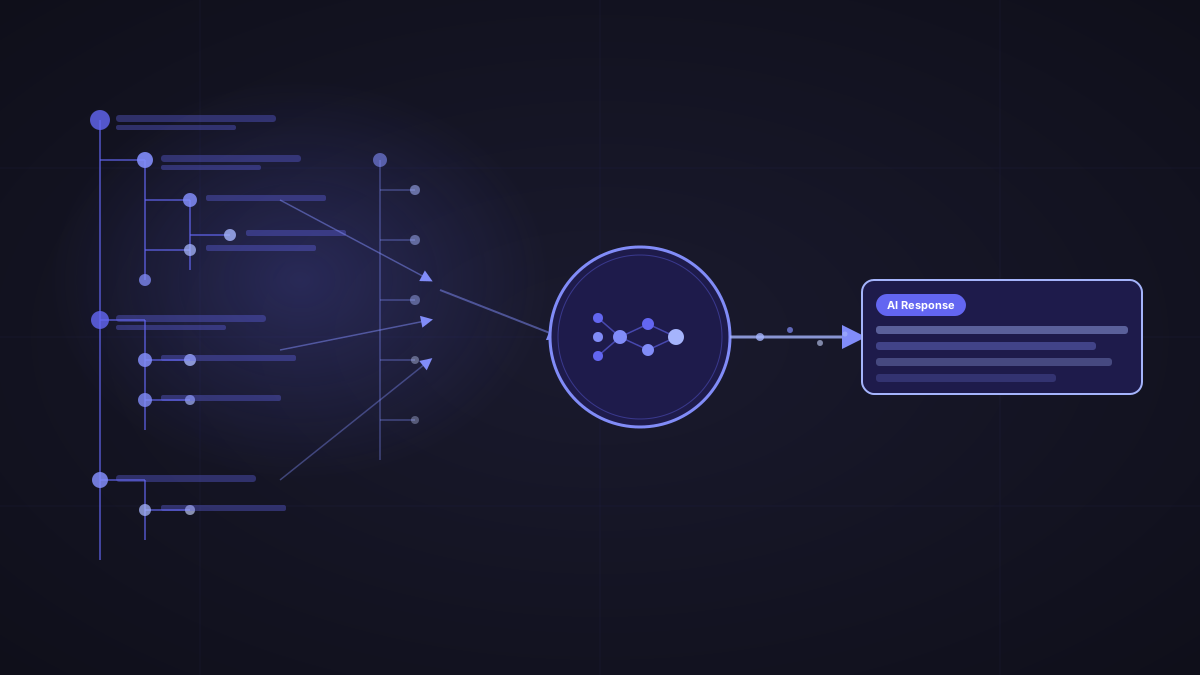
RAG adds a step before the model answers. When you submit a query, the system searches a live index, typically the web, pulls back a set of candidate documents, and hands them to the model as context. The model then writes its answer from what it retrieved, not only from what it learned in training. Retrieved documents often appear as citations in the response.
This is the mechanism behind Perplexity, Google's AI Overviews, Microsoft Copilot's Bing-powered search, and the web-search modes in ChatGPT and Claude. It closes the gap between publishing content and having it show up in an AI answer. Where a training-data-only model needs a full retraining cycle, sometimes a year or more, a RAG-based system can pick up a new or updated page within days of it being indexed.
That timing gap is the single most important fact for planning where your content budget goes: retrieval-based visibility moves in days, training-data visibility moves in retraining cycles.
Which AI models use which approach
The mix varies by platform and keeps shifting as vendors add retrieval to models that didn't previously have it.
- Perplexity is retrieval-first for every query. It has no fallback to stale training knowledge for factual claims, and it shows its sources openly, so you can check whether your content was used.
- ChatGPT relies primarily on training data by default, with web search available as a toggle. When a user doesn't turn search on, or the model doesn't judge a query as needing it, the answer reflects training data from the last update, and that covers a large share of ChatGPT usage.
- Google Gemini is hybrid. Its base model draws on training data, but Google integrates its search index deeply, especially for freshness-sensitive queries, and AI Overviews in Google Search are retrieval-based by construction.
- Claude operates primarily from training data by default. Anthropic added web search across all Claude plans, but the model decides per query whether a search is worth running rather than searching by default, so category-level brand questions on Claude still lean heavily on training data.
- Microsoft Copilot draws on Bing's live index and is retrieval-based, which is why fresh, well-indexed content matters for Copilot visibility specifically.
What retrieval systems actually cite
Not every page performs equally once it's inside a retrieval system's index. Four attributes decide whether a page gets pulled into a RAG-based answer.
- Recency: retrieval systems weight recently published or updated content higher for queries where freshness matters. A page updated last month can outperform an older page with more inbound links.
- Structural clarity: pages broken into clear H2 sections, each answering one distinct question, are easier for a retrieval system to match against a specific query fragment than a single page covering many topics loosely.
- Specificity: a page that directly addresses a narrow question retrieves better against that exact query than a broad, general page on the same topic. Niche pages are an asset in a retrieval-based system, not a liability.
- Authority: domain authority, earned links, and third-party citations still help retrieval systems trust that a source is worth citing. But a high-authority page with a weak structural match to the query often loses to a moderate-authority page that answers it directly.
These attributes are distinct from training-data strategy, which rewards durable, cumulative mentions across authoritative sources over a much longer horizon, regardless of how recently they were published.
What to do
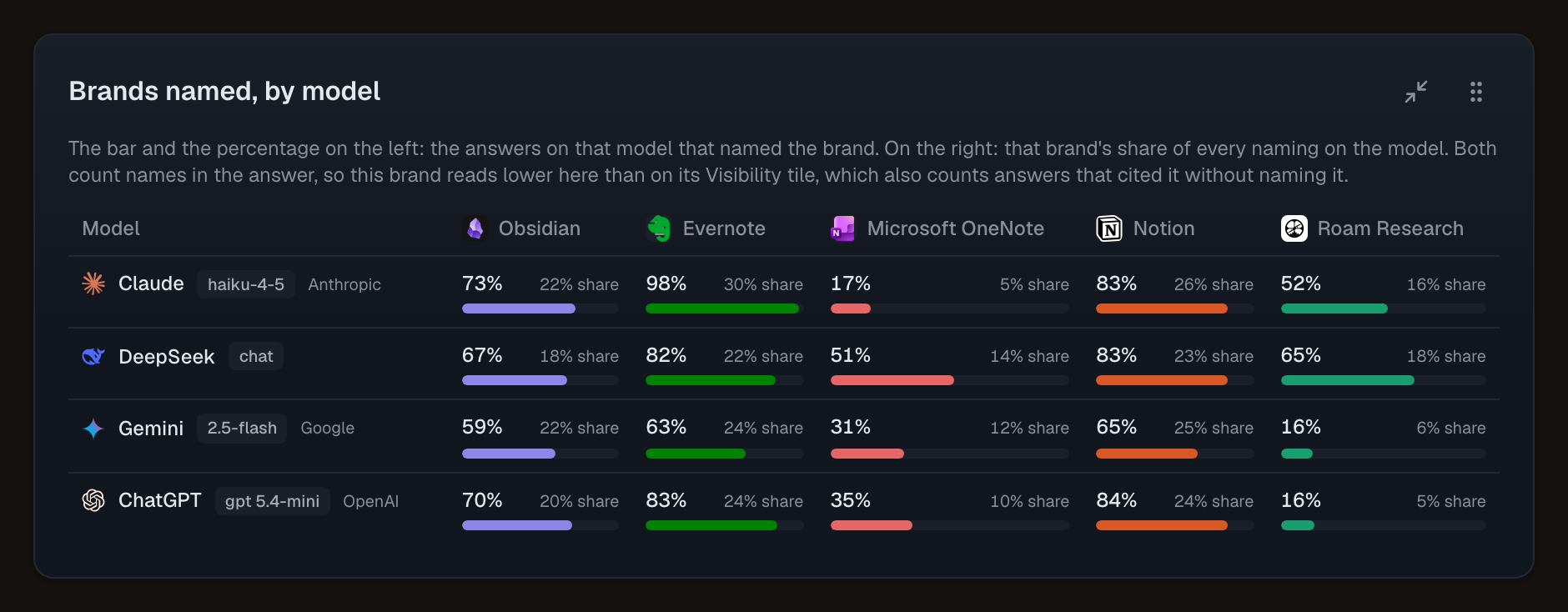
- Measure both. Run the same set of buyer-relevant queries across a retrieval-based model, such as Perplexity or Copilot, and a training-data-default model, such as ChatGPT or Claude without search enabled. If you score higher on the retrieval side, your live web presence is ahead of your historical coverage. If you score higher on the training-data side, the reverse is true. Either result tells you where to put the next round of budget.
- Treat retrieval as short-cycle work. Keep pages that answer high-intent buyer questions specific, current, and cleanly structured, and update them on a real cadence instead of leaving them to age.
- Treat training data as long-cycle work. Invest in consistent trade press coverage, review-platform presence, analyst mentions, and forum engagement. Expect the payoff on training-data models to show up only after the next major retrain, not immediately.
- Track divergence at the query level, not just in aggregate. A query where you appear on Perplexity but not ChatGPT points to a topic with strong current content and thin history. The reverse points to a topic where your historical presence is solid but your current page is outdated.
- Don't drop either track. Content that earns authoritative coverage today builds both the retrieval signal, since it's fresh and citable, and the training-data signal, since a future model will train on it too.
How Whaily fits
Whaily tracks brand visibility across both retrieval-based platforms, like Perplexity, and training-data-default models, like standard ChatGPT and Claude. That makes the divergence between them visible instead of anecdotal. AI visibility tracking shows where each platform currently places your brand, and citation source discovery shows which of your pages are actually getting pulled into retrieval-based answers.